A study in winter color
Winter color palette: true, deep or bright winter?
Explore dark purples, cool blues and bright pinks. See the three winter palettes and find colors to try.
Two tests sort the three winters, and warmth is not one of them because all three are cool. If your hair is much darker than your skin and clear, bright colors make your face look sharper, start with Bright Winter. If not, look at how dark your coloring is as a whole: dark coloring points to Deep Winter, and coloring that is not that dark points to True Winter.
Ask the Bright Winter question first, because it can win even when your coloring is dark. Hair color or skin color alone cannot give you the answer. Look at your face as a whole.
How do you choose between the three Winters?
| What you see | Start here | Test these colors |
|---|---|---|
| Your hair is much darker than your skin, and bright, clear colors make your face look sharper | Bright Winter | Cobalt, Shocking Pink, Ice White |
| Not that, and your coloring looks dark as a whole | Deep Winter | Pine, Oxblood, Frost White |
| Not that, and your coloring is not that dark | True Winter | True Red, Sapphire, Icy Blue |
Put one top or scarf from each row near your face in the same daylight. The right group makes your skin look even and your eyes look clear. A color you love on the hanger may look different near your face.
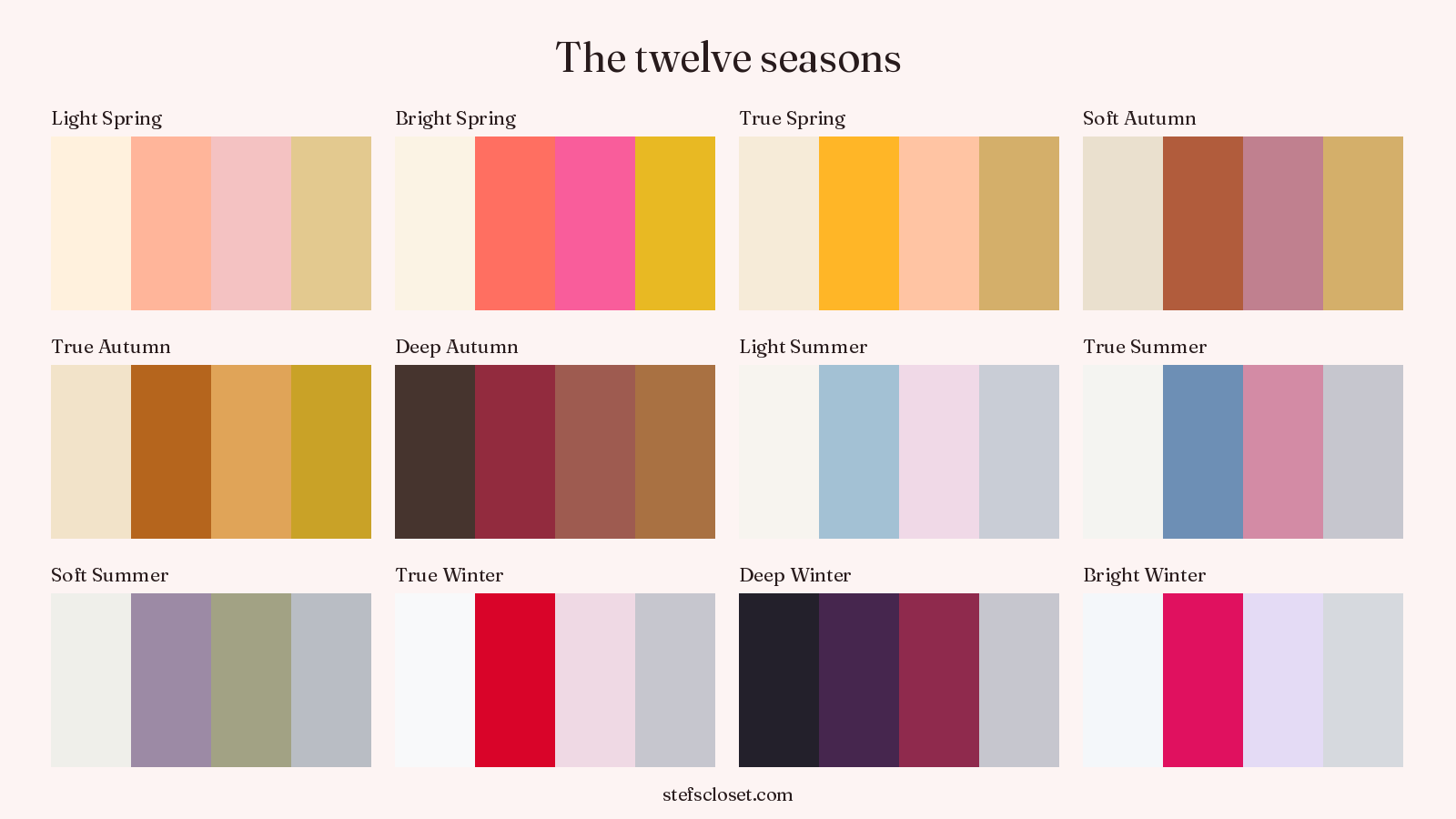
If you are stuck between two, the true winter vs deep winter guide works through that split alone. If you are not sure you are a Winter at all, start with cool summer vs cool winter.
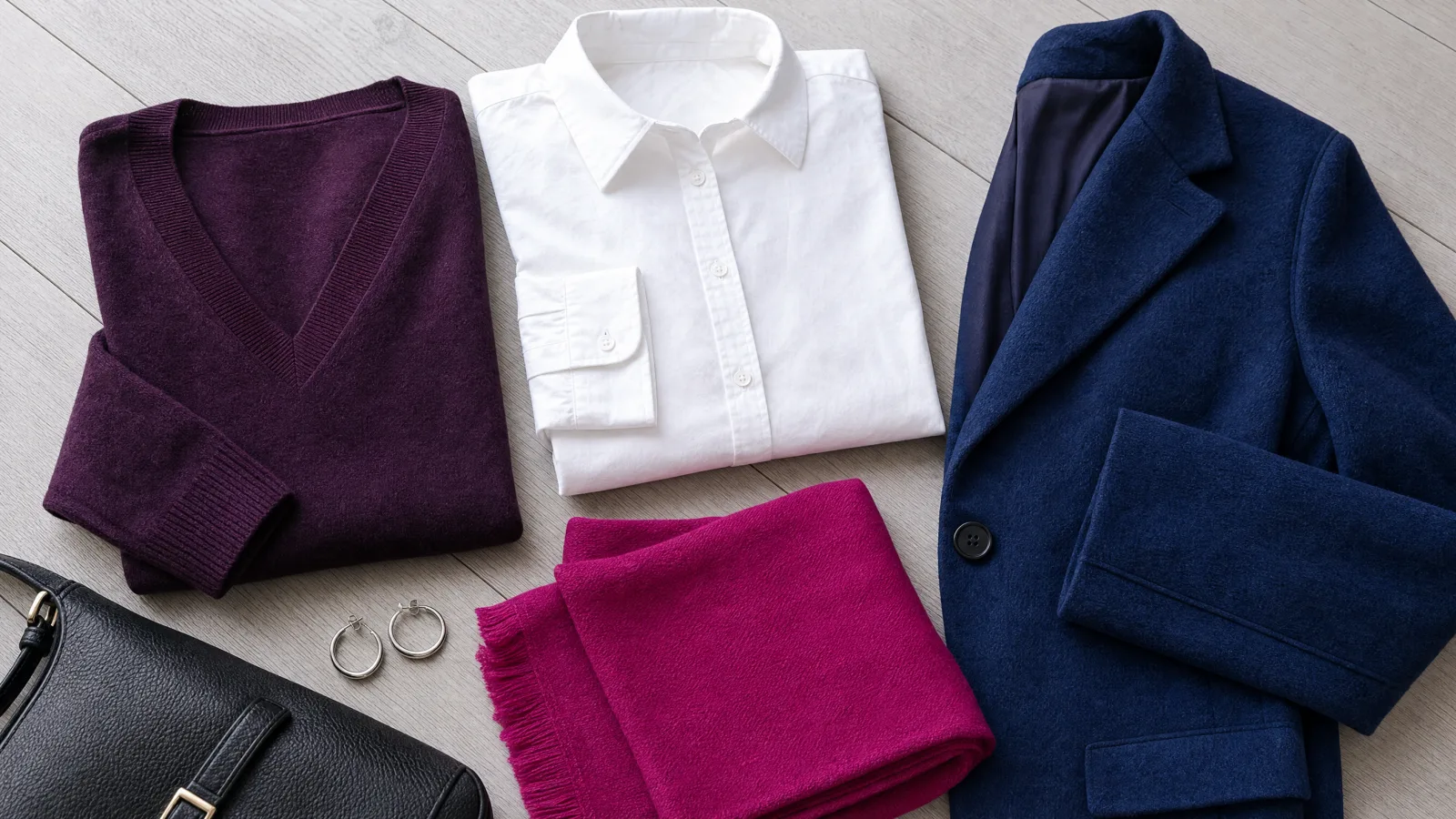
Three ways to wear winter color.
The first group is dark and rich. The middle group is cool and clear. The last group has the brightest colors.
Deep Winter
True Winter
Bright Winter
What colors suit the Winter family?
A palette is a group of colors. Winter palettes use cool, clear colors with strong contrast, which means there is a clear light-and-dark difference. Deep Winter is darkest. True Winter is coolest. Bright Winter is clearest.
Black, icy whites, cool blues, cool reds and silver-colored metals appear across Winter. The exact shade changes in each of the three palettes. Hannah and Sophia Rashad of Curate Your Style use the same three-part Winter family.
Winter can appear on light, medium or deep skin. Dark hair is common, but it is not required. If you are unsure about warmth, begin with the warm versus cool guide.
See the winter differences.
Look for depth, coolness and clarity. Each example brings a different quality into focus.

Depth comes first.
- Very dark hair and deep brown eyes stand out first.
- The whites of her eyes add a clear light-and-dark difference.
Deep Winter starts with depth and leans cool. Try Pine and Blackberry.

Cool color comes first.
- Dark, ash-toned hair and cool gray-blue eyes.
- Her hair is much darker than her skin.
True Winter puts coolness first. Try Sapphire and Icy Blue beside your face.

Clarity comes first.
- Clear eyes stand out against dark hair.
- The light-and-dark changes are easy to see.
Bright Winter pairs that clarity with cool color. Try Cobalt and Ice White.
These are example color patterns. A season includes many skin tones and eye colors. You do not need to look like the example. Hair and eyes give clues; compare fabrics near your face before choosing a season.
Are you Bright Winter?
Start with Bright Winter if clear, strong colors and sharp light-and-dark outfits suit you. It is the Winter closest to Bright Spring, but it still leans cool. The bright colors should make your face easier to see. They should not take over.
The Bright Winter palette uses Ice White, True Black and Cool Navy. Ruby Pink, Cobalt and Emerald join Ice Lilac, Shocking Pink and Turquoise Flash. Its metals are Polished Silver, Chrome and White Gold.
Test Cobalt with an Ice White scarf. Compare it with Sapphire and Crisp White from True Winter. If the clearer pair sharpens your features and the quieter pair looks dull, Bright Winter is the stronger match.
Are you Deep Winter?
Start with Deep Winter if dark hair and eyes stand out first. The skin may be deep or very light, as the concept wardrobe's Dark Winter guide also explains.
The Deep Winter palette uses Ink, Slate and Frost White as everyday basics. Blackberry, Pine and Oxblood bring rich color. Berry Rose, Royal Indigo and Smoked Plum sit beside Silver, Gunmetal and White Gold.
Try Pine near your face with Slate trousers and Gunmetal jewelry. If dark, cool color looks good near your face while Cobalt or Shocking Pink draws attention away from you, try more Deep Winter colors.
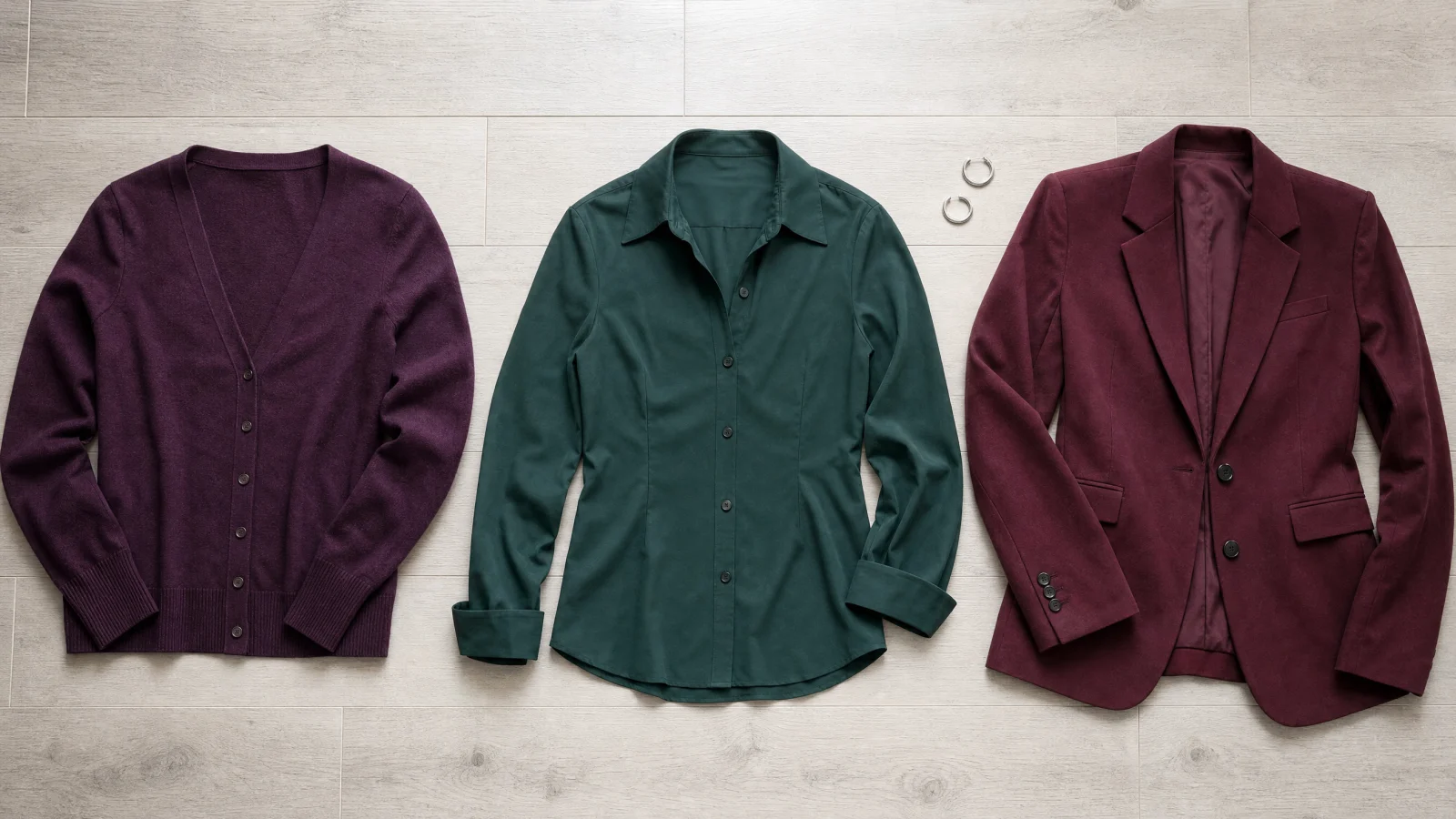
Start with the deeper colors.
Blackberry, Pine and Oxblood show how rich Deep Winter colors can look in clothes.
Are you True Winter?
Start with True Winter if very cool colors look best and you do not need the darkest or brightest Winter colors. Its named palette begins with Crisp White, Black and Indigo Night.
The concept wardrobe's True Winter guide also puts coolness first. Bright colors may suit you, but the strongest ones may feel like too much.
True Red, Sapphire and Emerald Teal are the stronger colors. Icy Pink, Icy Blue and Magenta Rose sit beside Silver, Platinum and Gunmetal. Try a True Red top with Black trousers, Silver jewelry and Crisp White at the neckline.
If that combination looks good near your face but brighter neon-like color feels too strong, True Winter is a good place to stay.
A bright color and an icy light.
Sapphire looks quite different beside Icy Blue than it does beside Black. These are all True Winter colors.
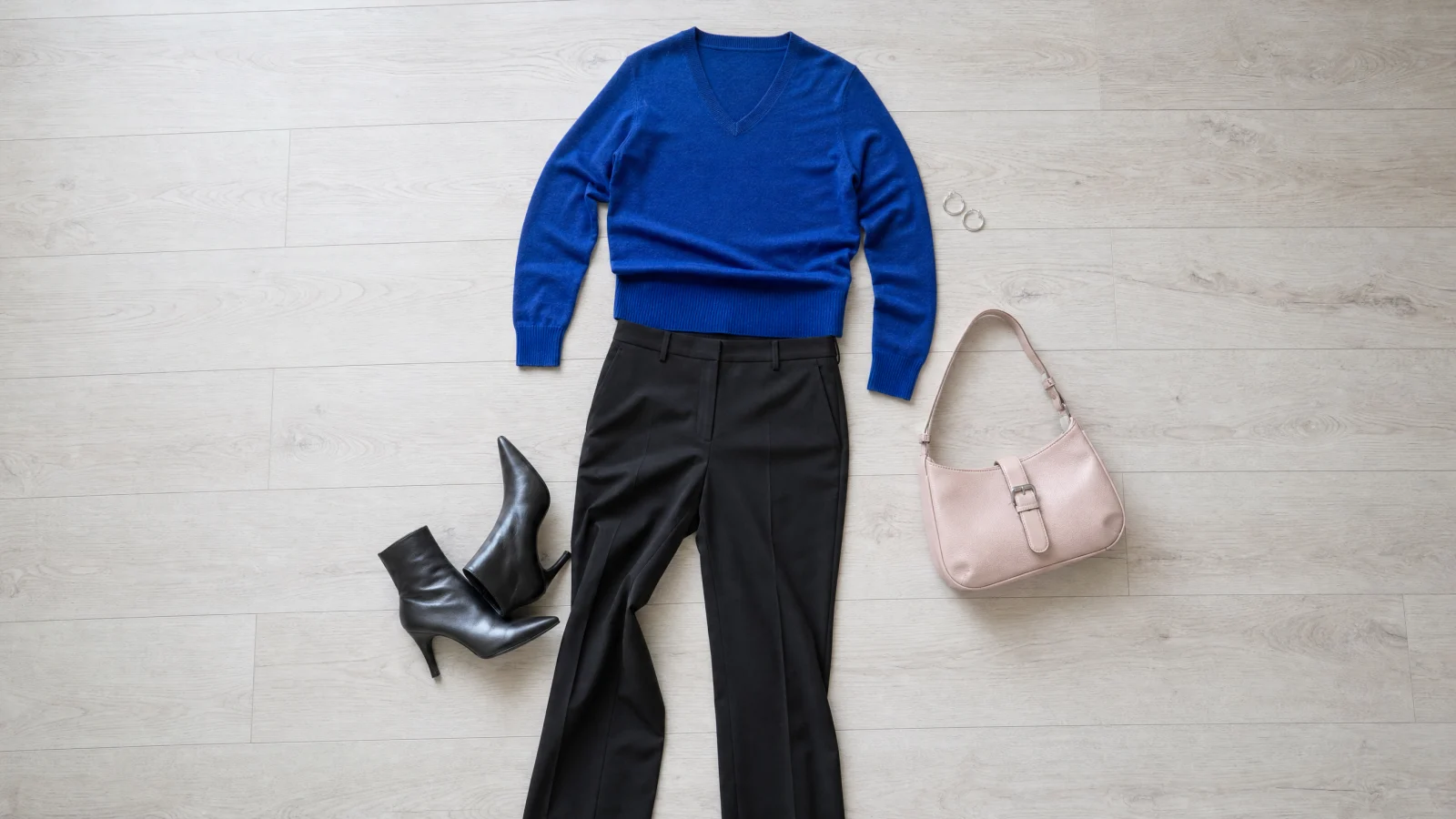
A blue top, dark trousers and a light bag make the different amounts of color easy to see.
Explore each winter palette.
Choose a season to see its clothing colors together. These are examples from our season guides, not your personal result.
Deep Winter
True Winter
Bright Winter
Can Winter wear black and white?
Yes, though each Winter group has its own versions. True Winter uses Black and Crisp White. Bright Winter uses True Black and Ice White. Deep Winter can use Ink with Frost White for a slightly richer version of the same contrast.
Black and white can support a Winter result, but they cannot tell you your season by themselves. You may like black for its practicality even when a softer or warmer dark color is better near your face.
Winter also repeats silver-colored metals across all three palettes. Try your usual silver jewelry with the black-and-white test. See whether the whole group looks at home on you.
What should you do with your result?
The free five-question color analysis asks about your skin, hair, eyes, which metal suits you, and whether your coloring looks bright or soft. It gives you one of the 12 seasons and a named palette. Use that result as a starting point, then test its colors with your own clothes.
If the result is not Winter, open the twelve-season guide. Deep Autumn is the nearest warmer neighbor to Deep Winter, and Bright Spring is the nearest warmer neighbor to Bright Winter.
Tomorrow, test one deep color, one cool clear color and one bright color by a window. Keep the winning group and open its season guide before you shop.
Open the full palette reference