The bright border
Bright spring vs bright winter: warmth decides
Two palettes at the same clarity, one warm and one cool. Hold a clear orange and a cool blue to your face to see which one belongs.
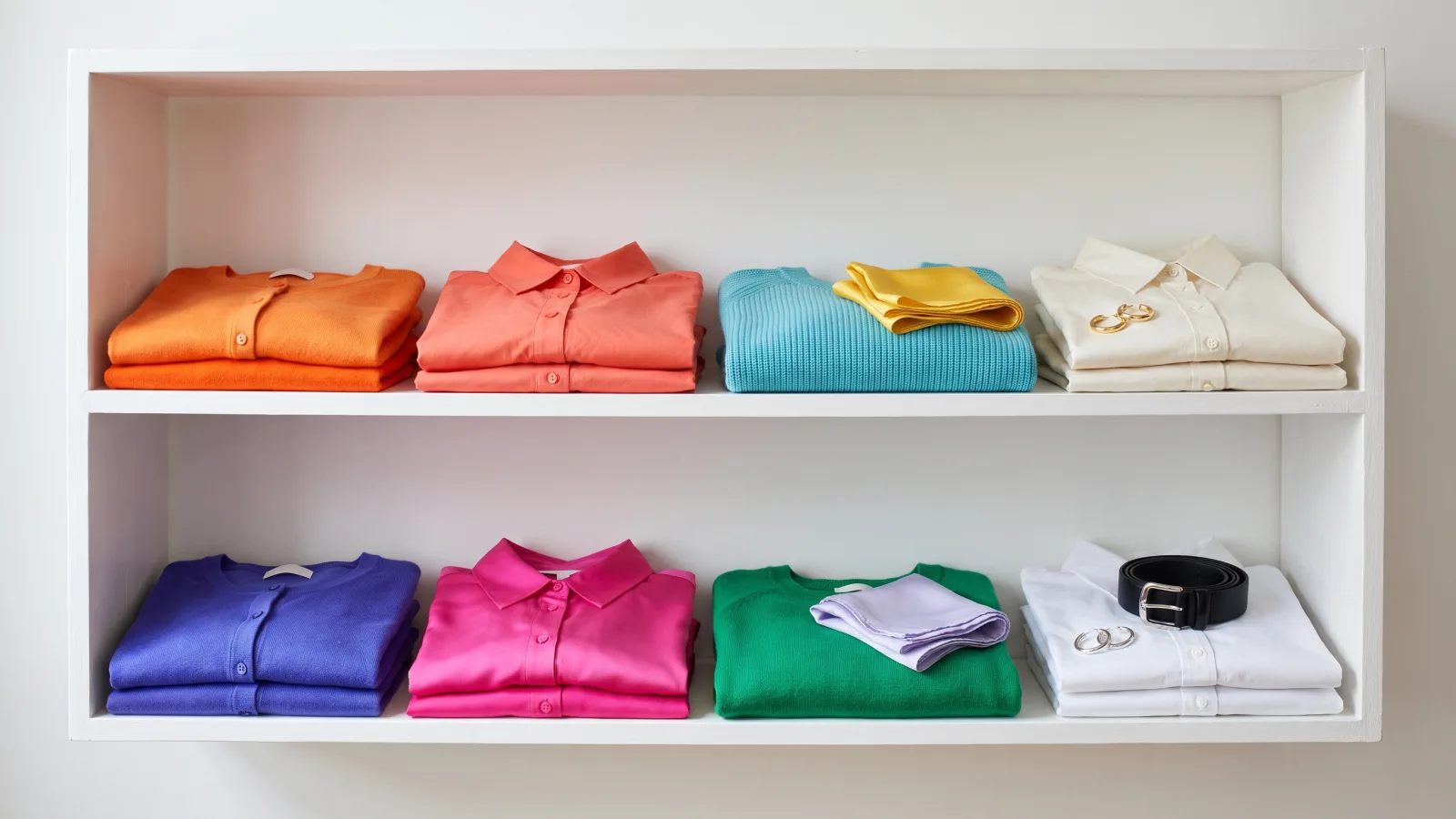
Bright Spring and Bright Winter are equally clear and bright, so brightness cannot split them. Warmth decides whether you belong in warm Bright Spring or cool Bright Winter. The best test compares equally clear colors at different temperatures.
Same clarity. Opposite temperature.
Both columns are bright and clean. The left side leans golden, and the right side leans blue. Brightness cannot split them, so look at warmth.
Bright Spring
Bright Winter
Colors from the Stef's Closet season palettes. Compare actual fabrics in daylight to see which ones you like near your face.
What separates Bright Spring from Bright Winter?
Warmth is the dividing line. Bright Spring is warm and clear. Bright Winter is cool and clear.
Truth is Beauty, “Distinguishing Bright Winter From Bright Spring”, published in June 2013, puts it plainly: “The differences are mainly in the temperature of the hues.” The blog suggests comparing a saturated warm orange with a purple-leaning blue. Neither pack here has that purple-leaning blue, so the closest pack test is Tangerine against Cobalt, a warm orange against a cool blue.
This is a closer test than asking whether bright color looks good. Both seasons need that clarity. If you need help reading the result, the warm versus cool skin tone guide explains what to watch for in your face.
The question the quiz settles here is warmth. It asks which metal makes your face look brighter, gold or silver, and falls back on your hair and eye color when you answer both or can't tell.
What does Bright Spring look like?
Bright Spring looks warm and clear. In the mirror, your skin may appear more even beside the warmer test colors. Your features may also look sharper beside Bright Gold than beside a cool metal.
The Bright Spring palette has warmth in every group.
The warm pack, group by group.
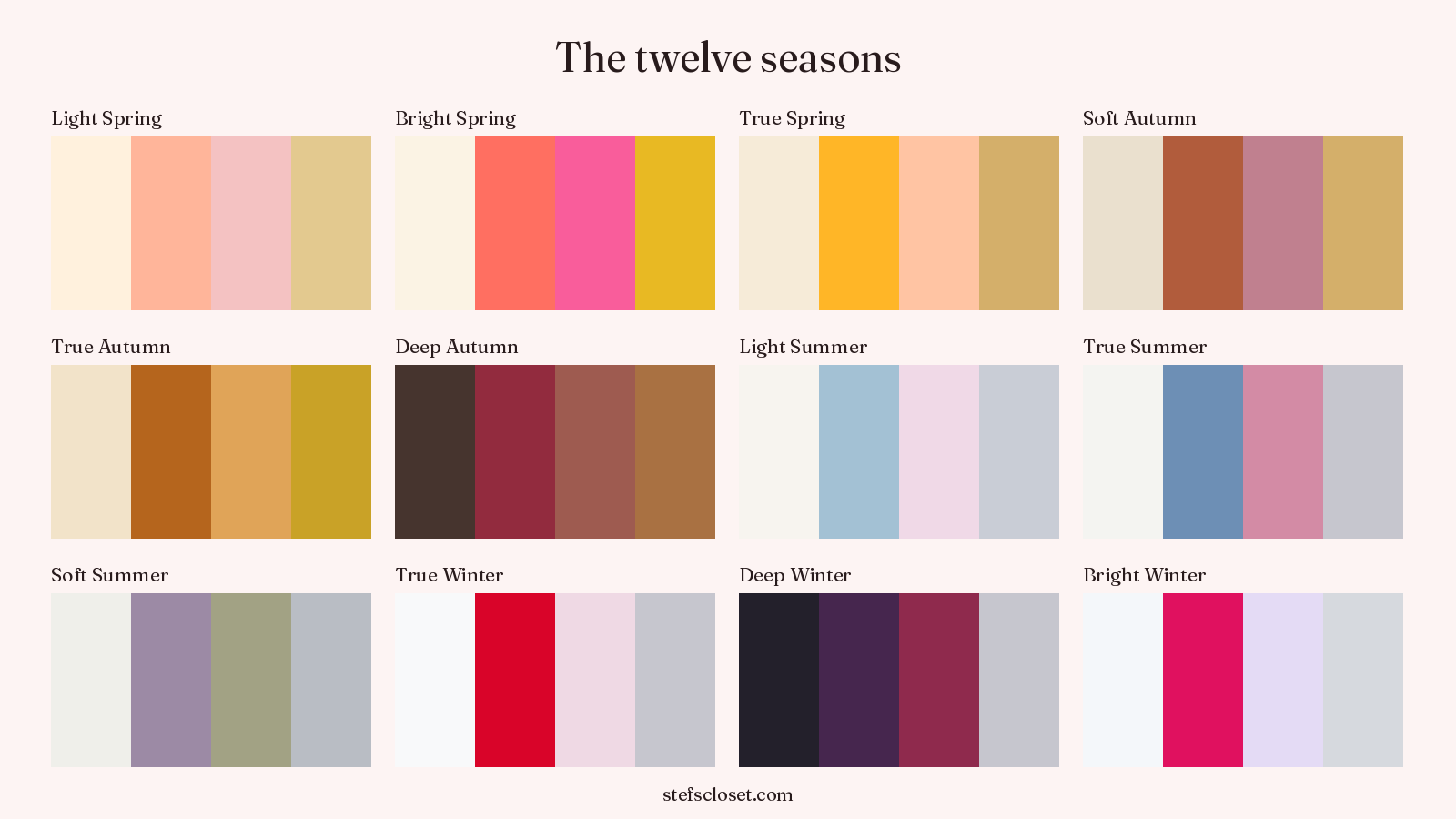
The four groups run from neutrals to metals, in pack order. The neutrals and metals lean golden.
The warm set, in clothes.
A coral blouse and a turquoise cardigan, with a green blazer and gold hoops. The fabric sits near the palette colors named underneath rather than matching them exactly.
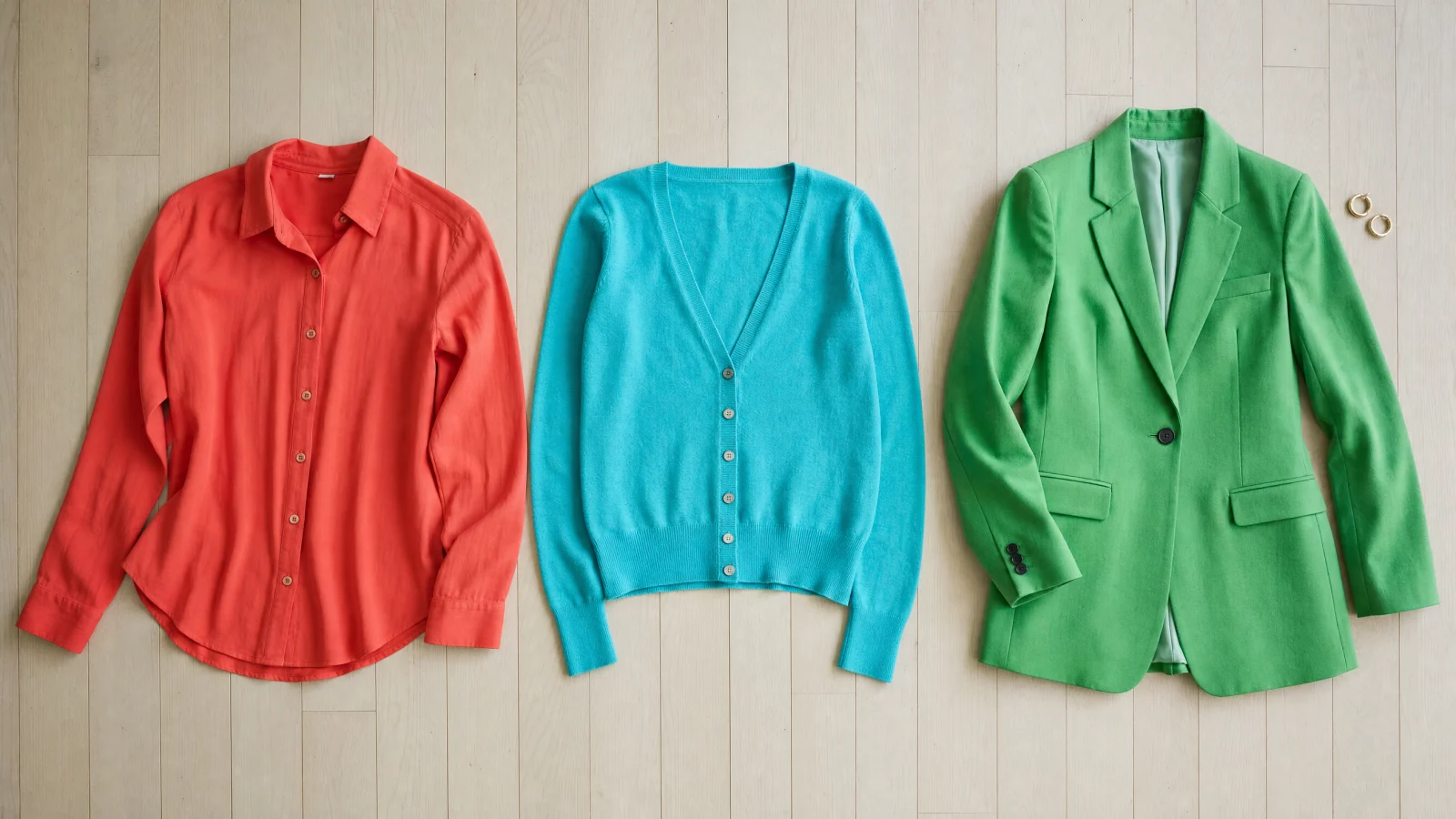
You do not need to like every choice before the pattern appears. Start with Tangerine because the other pack has no matching warm orange. Then check Ivory near your face. In a good result, your skin looks clear without a cool cast.
What does Bright Winter look like?
Bright Winter looks cool and clear. Cobalt is the useful test color here. In the mirror, your skin may appear brighter beside it. Your skin may look less even beside Tangerine.
The Bright Winter palette has the same clarity at a cooler temperature.
The cool pack, group by group.
The same four groups as Bright Spring. Here the neutrals turn icy or dark, and two of the three metals are silver.
The cool set, in clothes.
Hold these against the Bright Spring pieces above. The clarity is the same, so the difference you are looking for is temperature.
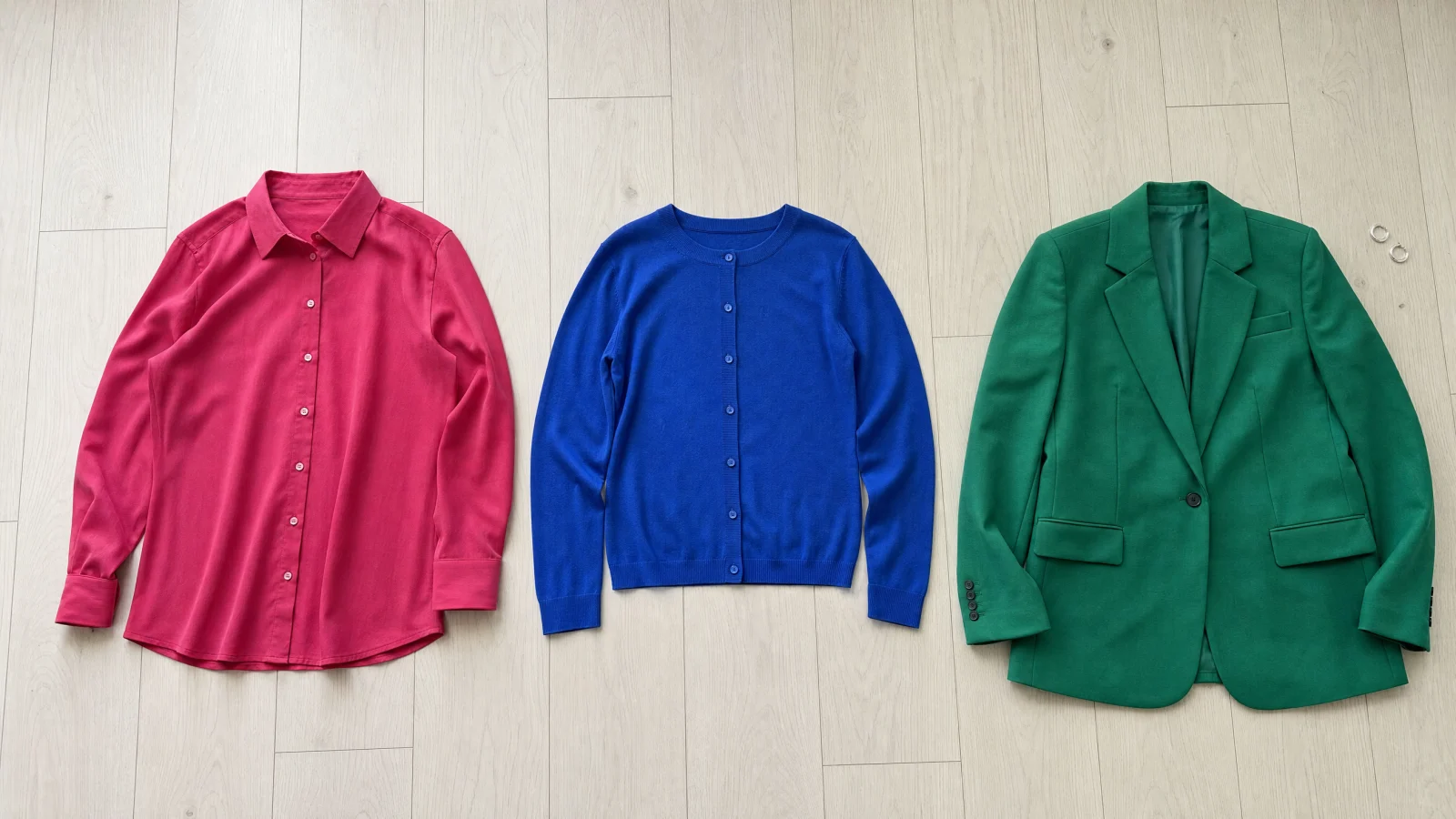
Bright Winter is only one Winter result. The guide to the three Winter palettes helps when your coloring seems cool but the Bright choices look too strong. Pay attention to what happens around the eyes instead of choosing the color you prefer.
Which clues do people get backward?
The usual shortcuts are weak because both seasons can have striking coloring. Shared color families do not settle temperature. Dark hair alone does not settle it either.
- Shared hot pinks and turquoises cannot decide the season. Compare a warm version with a cool version instead.
- Dark hair alone does not make you Bright Winter. You also need clear coloring, plus high contrast or blue, green or gray eyes. If your coloring is deep, only high contrast counts.
- Deep and warm coloring is Deep Autumn in the method used here. It does not become Bright Spring.
Do not decide from one feature in a mirror. Hold the test color right under your chin. Look for more even skin and clearer eyes, not a perfect match with your hair.
How do the two palettes compare?
Each pack holds twelve colors at the same clarity. Bright Spring has the warmer version in each group. Bright Winter has the cooler one.
Palette Hunt’s comparison, checked October 8, 2026, lists six colors for each season. Three of those six names repeat on both sides: Electric Blue, Hot Pink, Lime Green. Its FAQ still calls a side by side check of signature shades the clearest test.
That advice needs one extra limit. When half the names match, a comparison by color family cannot decide your season. Compare temperature within the family, or choose a pair with a clearer warm and cool split. The temperature difference is easy to see with Tangerine against Cobalt.
The pack pairs also show why similar names are not enough. Both packs hold a turquoise, Clear Turquoise and Turquoise Flash. Both hold a vivid pink, Watermelon and Shocking Pink. Those pairs sit too close to settle temperature. Tangerine against Cobalt is the clearer split.
Nine clothing colors from each pack.
Read the two columns as groups. Both have a turquoise and a pink, so those families cannot decide it. Look at Tangerine on the left and Cobalt on the right instead.
Bright Spring
Bright Winter
Colors from the Stef's Closet season palettes. Compare actual fabrics in daylight to see which ones you like near your face.
How does this method handle depth?
Both Bright results require clear coloring in this site's method. At light or medium depth, clear coloring reads Bright when your hair is much darker or much lighter than your skin. Blue, green or gray eyes meet the same rule. Warmth then chooses between the two Bright seasons.
Clear coloring without either clue goes elsewhere. A warm result becomes True Spring. A cool result becomes True Winter.
The deep branch is different. Overall deep coloring takes brown or black hair plus depth in the skin or eyes. Blonde or gray hair never reads deep here. Deep and warm becomes Deep Autumn here. Deep and cool becomes Bright Winter only when coloring is clear and contrast is high. Otherwise, the result is Deep Winter.
Bright Winter can come at any depth here, but Bright Spring is never deep. Truth is Beauty's Part II shows Bright Springs from very fair skin through deep golden skin. That is a difference between methods, not a correction of the blog.
How can I test Bright Spring vs Bright Winter at home?
Test the warm side against the cool side in daylight beside a window. Keep your place fixed as you change each pair. Check your face before looking at the fabric itself.
Same light. Same spot. Change the fabric.
Face a window with soft daylight. Compare one fabric at a time, keeping everything else the same.
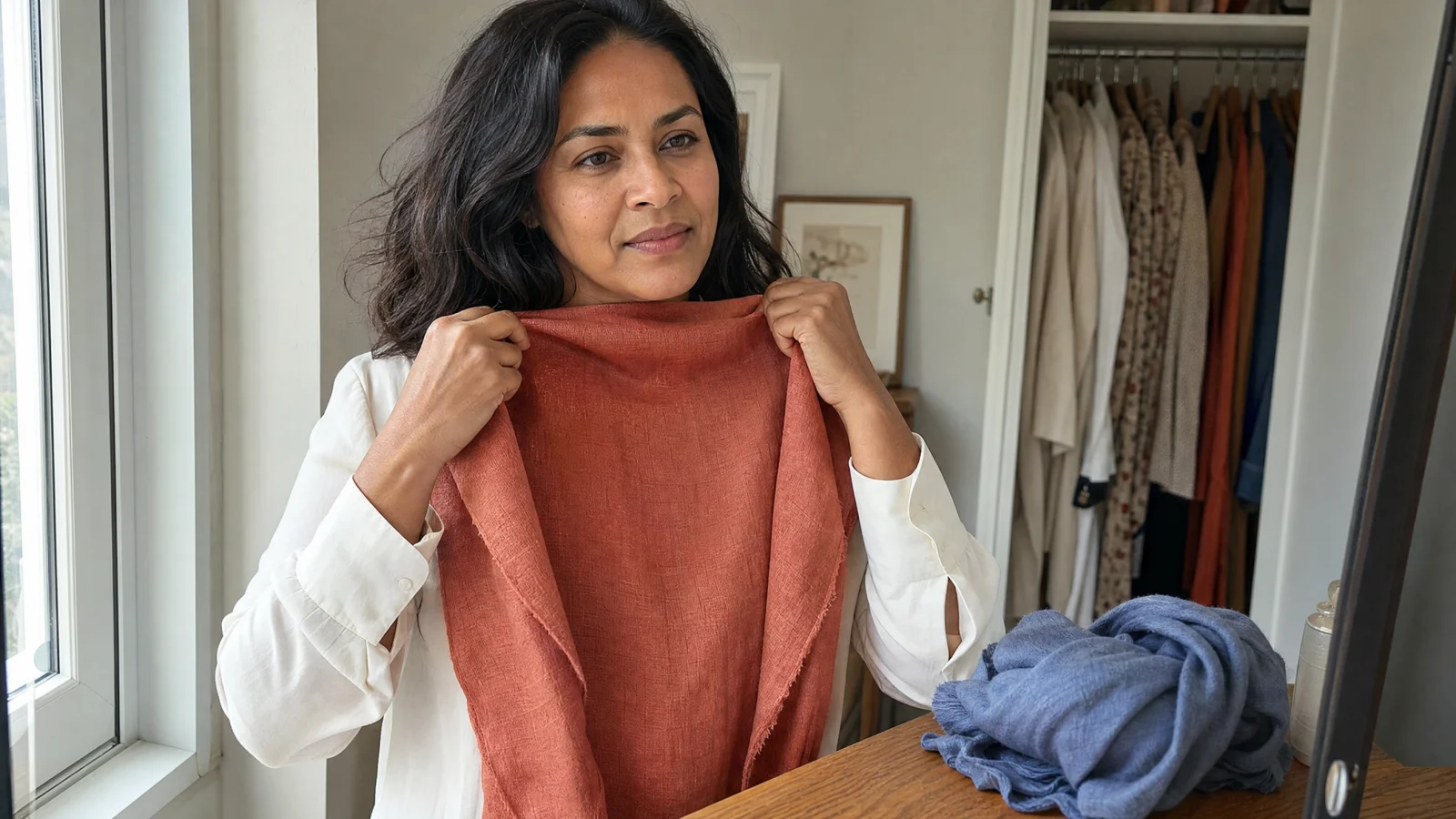
Avoid direct sun and colored lamps.Look at your face.
Keep the mirror and your position still.Swap one thing.
Try the next fabric in the same place.
- Hold Tangerine beside your face, then switch to Cobalt. Look for more even skin. Check whether the whites of your eyes look clearer.
- Compare Ivory with Ice White. A clearer face beside Ivory supports Bright Spring. A clearer result beside Ice White points to Bright Winter. Ignore which one matches more clothes in your closet.
- Hold Bright Gold near your face, then Polished Silver. Note where your face looks brighter without uneven patches.
If every pair looks too strong, use the season guide hub to check a softer season. If the pairs split, repeat them on another day at the same window. Tomorrow hold Tangerine and Cobalt to your face in daylight. Choose the clearer result, then shop from that season's twelve colors.
Open the full palette reference
A few more answers
What separates Bright Spring from Bright Winter?
Warmth is the dividing line. Bright Spring is warm and clear. Bright Winter is cool and clear.
Which clues do people get backward?
The usual shortcuts are weak because both seasons can have striking coloring. Shared color families do not settle temperature. Dark hair alone does not settle it either.
How can I test Bright Spring vs Bright Winter at home?
Test the warm side against the cool side in daylight beside a window. Keep your place fixed as you change each pair. Check your face before looking at the fabric itself.