The cool border
Cool summer vs cool winter: what decides it
Two cool palettes, one soft and one clear. Settle clarity first, then check your hair only if you need to.

Cool Summer and Cool Winter are both cool, so undertone cannot tell them apart. Check chroma first: clear coloring points toward Winter, while balanced coloring leaves hair depth to decide between True Winter and True Summer.
Two whites, two blues, two neutrals.
Both columns are cool. The left side sits soft and close together. The right side jumps from bright white to black, with clearer color in between.
True Summer
True Winter
Colors from the Stef's Closet season palettes. Compare actual fabrics in daylight to see which ones you like near your face.
What separates Cool Summer from Cool Winter?
Chroma decides first, and clear coloring reads as Winter. Chroma means how clear or how grayed a color looks. Muted coloring points to Soft Summer, so it is neither season on this page.
The question the quiz settles here is how clear or soft your coloring reads. It asks that directly instead of guessing it from your hair.
Balanced chroma means your coloring looks in between clear and muted. Only then does hair depth split these two. Dark brown or black hair leans True Winter. Anything lighter leans True Summer, including gray or silver. If your whole coloring is light, the Summer result is Light Summer instead.
One limit matters. A deep result is never True Winter in this site's system. It becomes Deep Winter or Bright Winter. Clear coloring with high contrast also reads Bright Winter rather than True Winter. So does clear coloring with blue, green or gray eyes.
On her page updated July 30, 2026, Stacey Herndon at Radiantly Dressed credits neutral drapes with helping her tell the seasons apart. She writes that this comes from more than 100 color analyses, her own count of her work. She also writes, "Only Winter types can wear black and white without it appearing overly harsh." Her blue test drapes cornflower for Cool Summer against cobalt for Cool Winter. The test below uses French Blue and Sapphire instead, because both come from the palettes on this page.
Her tests are useful. Her FAQ starts with undertone, but that step can only confirm that you are in a cool family. It cannot split two seasons that are cool already.
Two cool faces. Look at the hair.
Neither example is warm. When chroma sits in between, hair depth decides, so compare how dark the hair is. These are example patterns, not diagnoses.

Cool color, held a little clearer.
- Cool ash-brown hair and smoky gray-green eyes.
- Her hair sits a step darker than her skin.
True Summer stays cool and keeps more color. Try French Blue and Raspberry Rose.

Cool color comes first.
- Dark, ash-toned hair and cool gray-blue eyes.
- Her hair is much darker than her skin.
True Winter puts coolness first. Try Sapphire and Icy Blue beside your face.
These are example color patterns. A season includes many skin tones and eye colors. You do not need to look like the example. Hair and eyes give clues; compare fabrics near your face before choosing a season.
What does True Summer look like?
True Summer looks cool with balanced softness. Near Soft White or French Blue, your face may look more even than it does near the sharper Winter choices. You may also find that Grey Flannel sits more easily near your face than Black.
Cool color, soft enough to blend.
Three ordinary pieces in the True Summer colors named underneath. The fabric sits near those palette colors rather than matching them exactly.
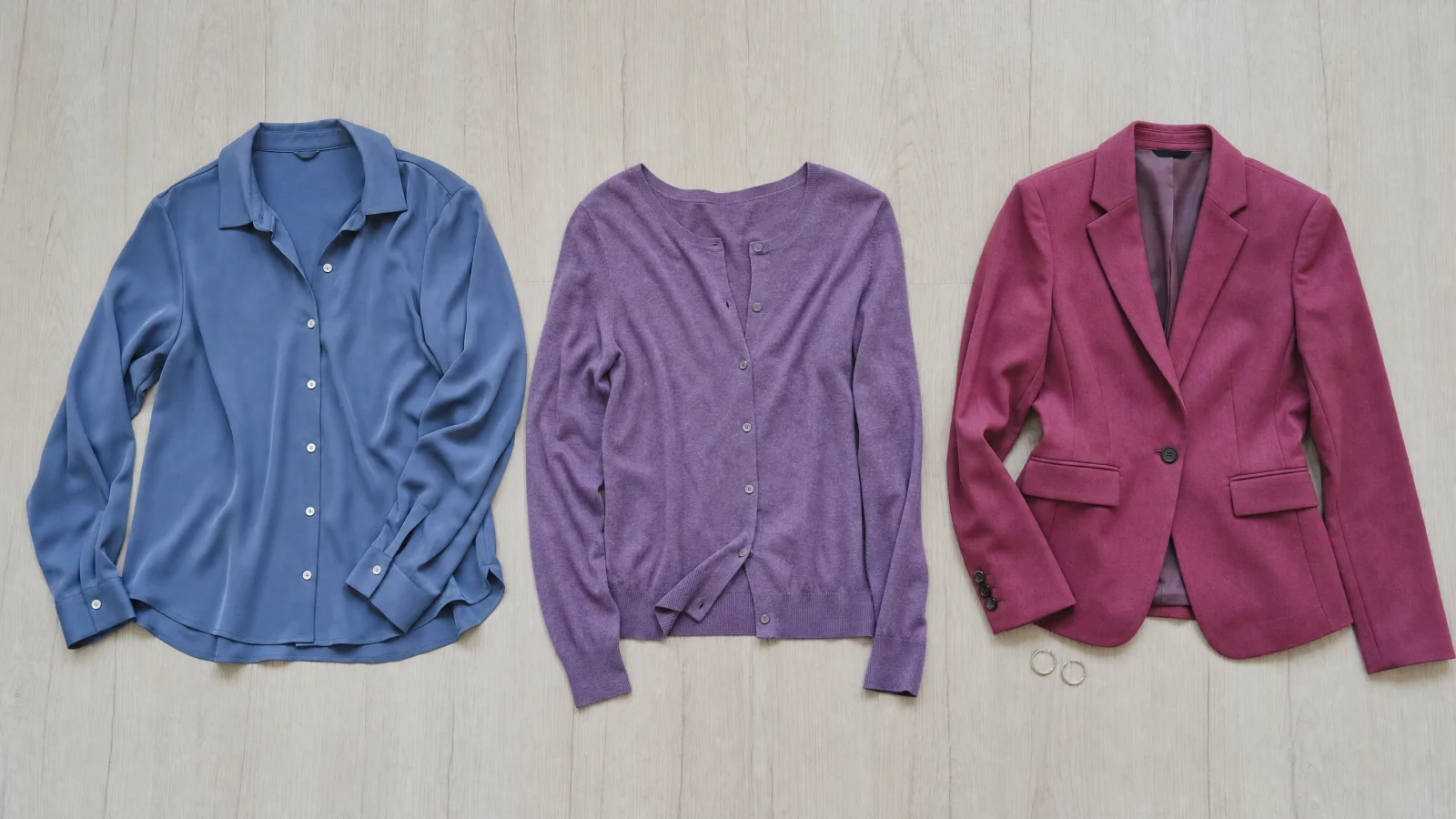
This is not the most muted Summer. If every clearer shade looks harsh, compare this result with Soft Summer. The full True Summer palette shows the range used here.
What does True Winter look like?
True Winter looks cool and clear without reading mainly deep. Near Crisp White or Sapphire, your face may look brighter than it does near the softer Summer choices. Black may look clean rather than severe.
The clear set, in clothes.
Hold these against the True Summer pieces above. The difference you are looking for is clarity, not warmth.
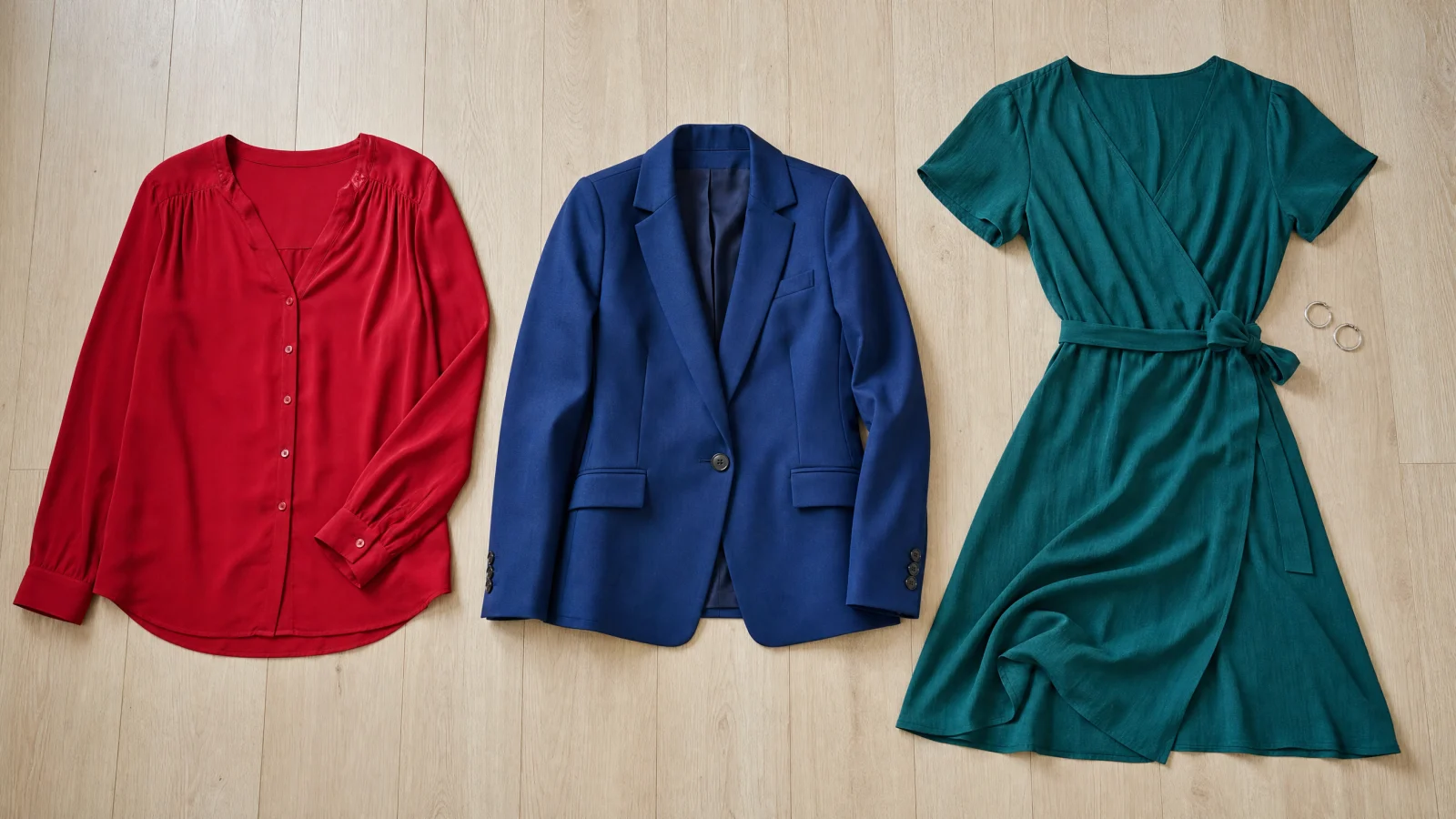
True Winter still has boundaries. If your whole coloring reads deep, use the Deep Winter check. If you have clear coloring plus high contrast or light eyes, Bright Winter is the better result. The True Winter palette shows the colors together.
Which clues do people get backward?
Three common clues can send you to the wrong result:
- Cool undertone gets you to both seasons. It does not choose one.
- Dark hair splits these two only when chroma looks balanced. Clear or muted coloring has already sent you elsewhere.
- Hair that used to be dark is not treated as dark hair by every method. The method used here reads the hair you have now.
Use daylight beside a window for every comparison. Keep your place and the light the same when you change drapes.
How do the True Summer and True Winter palettes compare?
Both palettes are cool. True Summer stays softer. True Winter has a clearer jump from its light colors to its dark ones.
The nine clothing colors in each set.
Read the two columns as groups. The metals are listed in the full palette guides, and both of them include Silver.
True Summer
True Winter
Colors from the Stef's Closet season palettes. Compare actual fabrics in daylight to see which ones you like near your face.
Silver is in both groups, so one good result with it does not settle the choice. Start with the white pair. Use the blue pair to check the same result.
Why do some pages use different season names?
In most systems, Cool Summer and Cool Winter are older names for what this site calls True Summer and True Winter. As checked on October 1, 2026, Truth is Beauty explains that Color Me Beautiful had "Cool Summers and Winters" and that Sci/Art founder Kathryn Kalisz "replaced Warm and Cool with True." Karen Brunger's International Image Institute system lists Cool Summer and Cool Winter among its sixteen palettes.
Not every sixteen-season system works that way. Style Solutions for You lists Cool Winter as its own type beside True Winter, as checked on October 1, 2026. One reader's account on Reddit, fetched the same day, describes palettes where Cool Summer is a different season, also called Dark or Deep Summer. Check the source's system before using its advice. The sixteen-season color analysis guide maps the names used here.
Can gray or silver hair still mean True Winter?
Yes, but clear coloring must put you in Winter first. At balanced chroma, gray or silver hair counts as light in this method and points toward Summer rather than True Winter.
This differs from Roberta Lee's Cool Winter guide, fetched October 1, 2026. Her guide counts dark hair that has gone gray or white as Winter hair. A commenter there had once been a dark brunette and now had white or platinum hair. A reply said draping was the only way to find the right intensity.
The difference is the hair rule. Lee's guide keeps the earlier dark hair in the reading. This method uses the hair you have now. The daylight comparison below is still a drape test, but it gives hair a role only when the color result is in between.
How can I test Cool Summer vs Cool Winter at home?
Use a two-step test in daylight. Check the color pairs first, and look at hair depth only if neither side gives you a clear result.
Same light. Same spot. Change the fabric.
Face a window with soft daylight. Compare one fabric at a time, keeping everything else the same.

Avoid direct sun and colored lamps.Look at your face.
Keep the mirror and your position still.Swap one thing.
Try the next fabric in the same place.
- Hold Crisp White beside your face, then Soft White, while you stand near a window. Look for the side where your skin appears more even. Repeat with Sapphire and French Blue. If your face looks clearer beside Crisp White and Sapphire, you read as Winter. If you look better beside Soft White and French Blue, your coloring leans soft, so you read as Summer. Then compare True Summer with Soft Summer before you decide.
- If neither side is clearly better, treat your chroma as balanced. Dark brown or black hair leans True Winter. Lighter hair leans True Summer, and that includes gray or silver.
Do not choose the fabric you like best. Keep the light and your distance from the window the same for every drape. You can browse the other season checks from the season guide hub.
Tomorrow, hold Crisp White beside Soft White in daylight. If neither is better, check the hair you have now and open the matching season guide before you shop.
Open the full palette reference
A few more answers
What separates Cool Summer from Cool Winter?
Chroma decides first, and clear coloring reads as Winter. Muted coloring points to Soft Summer, so it is neither season on this page.
Can gray or silver hair still mean True Winter?
Yes, but clear coloring must put you in Winter first. At balanced chroma, gray or silver hair counts as light in this method and points toward Summer rather than True Winter.
How can I test Cool Summer vs Cool Winter at home?
Use a two-step test in daylight. Check the color pairs first, and look at hair depth only if neither side gives you a clear result.