The jewelry edit
Gold or silver: which should you wear?
Try gold and silver beside your face. See which you like with your clothes, and why it is fine to enjoy both.
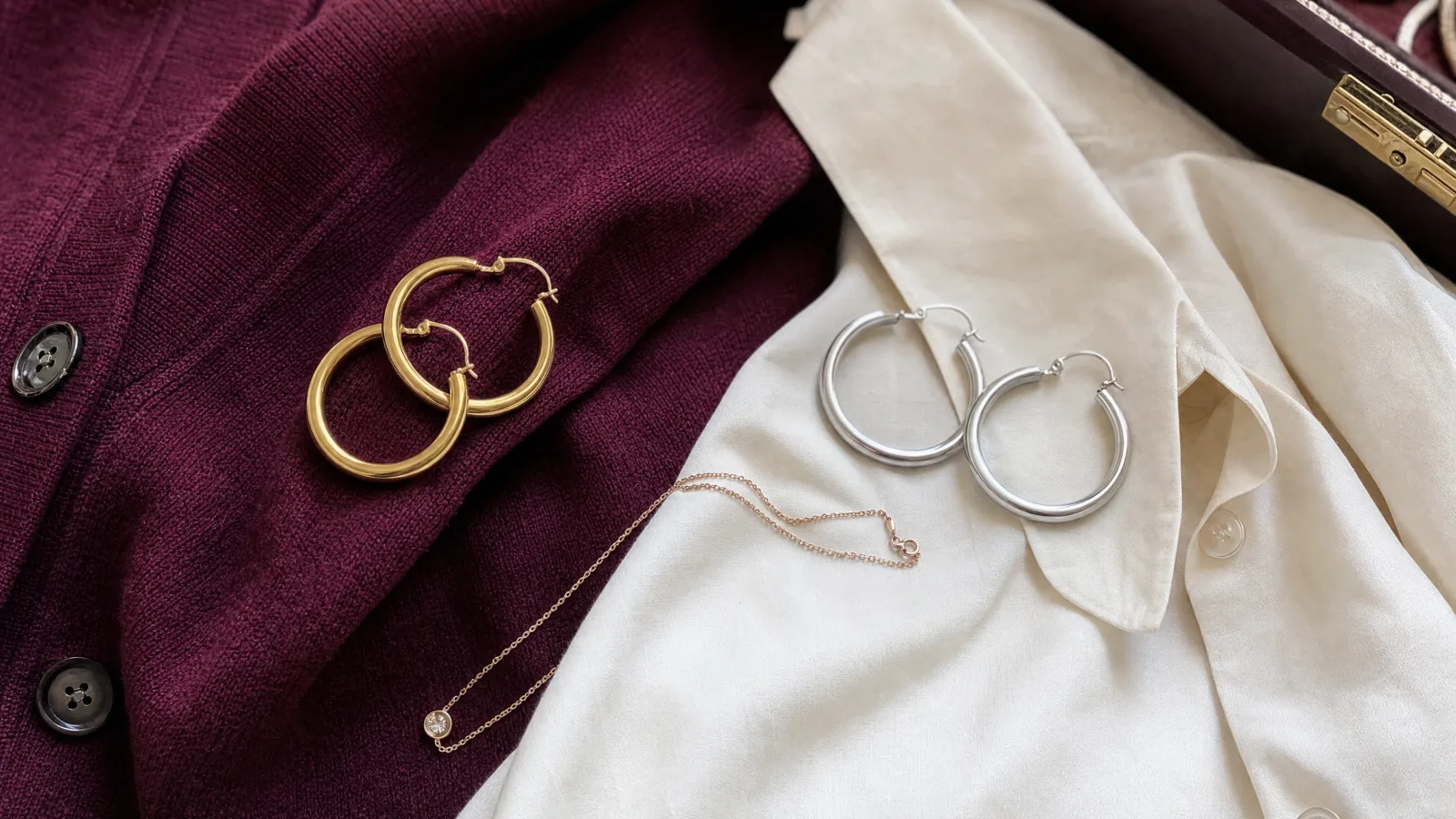
Wear the metal you like near your face and with your clothes. Gold often suits warm coloring. Silver often suits cool coloring. Many people can wear both.
You can learn something from the comparison if you hold each metal near your face in the same light. Asking which one you prefer tells you about your taste, your wardrobe, and what is already in your jewelry box. It does not tell you for sure whether your skin looks warm or cool.
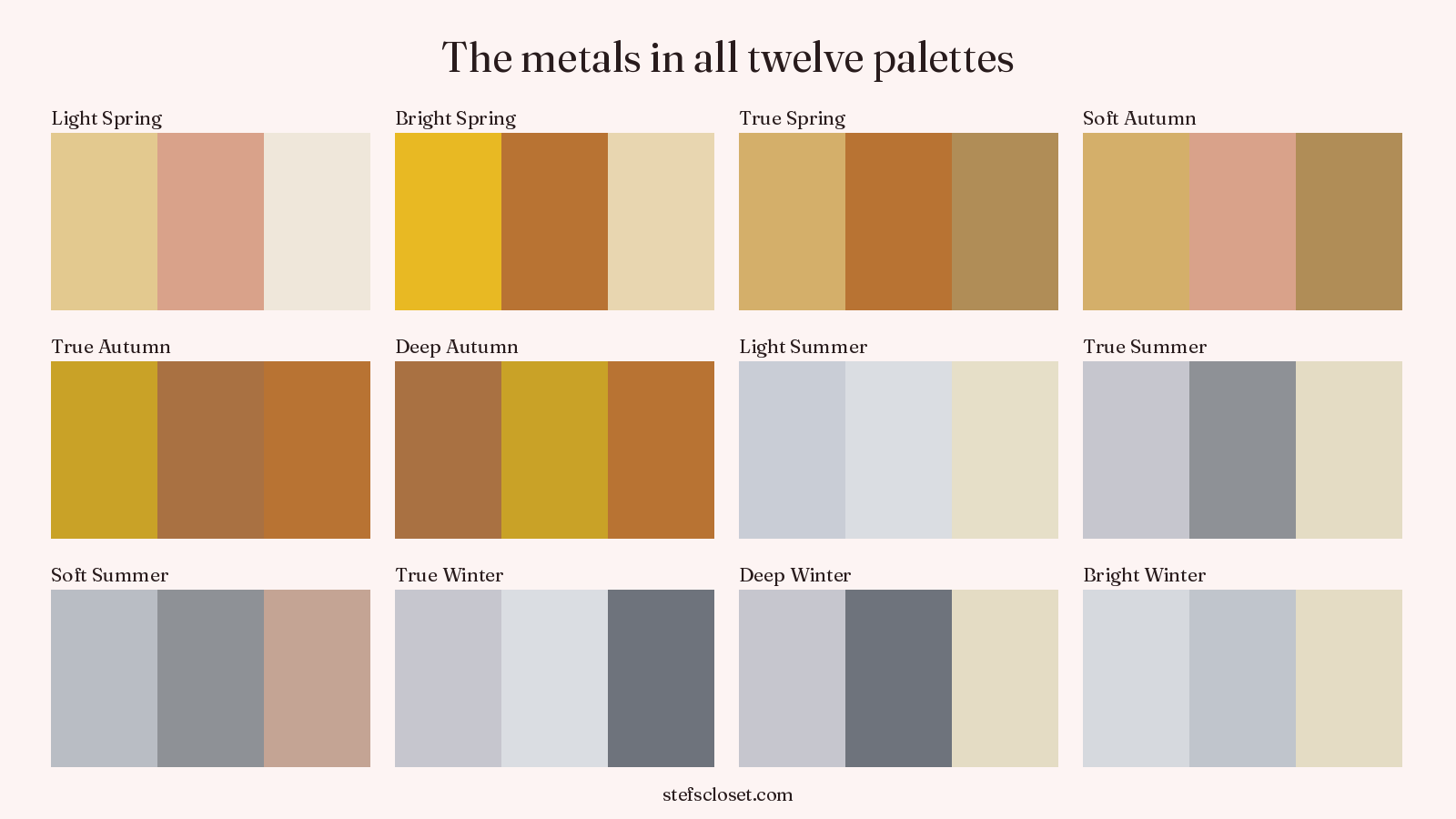
One season can suggest several metals.
These two example palettes each include three choices. The flat chips show the color; real jewelry also has shine and texture.
Soft Autumn
Soft Summer
How do you do the gold or silver test?
Choose a gold piece and a silver-colored piece. Pick two that are about the same size and shine. Large matte gold hoops compared with a tiny polished silver stud make the metal color hard to judge. Earrings are convenient, but a necklace or two pieces held beside your jaw will work.
- Stand near a window in indirect daylight.
- Remove other visible jewelry and cover a brightly colored neckline.
- Hold the gold in place, then put the silver in the same spot.
- Watch your face as you switch between them.
- Repeat once. Choose both or unsure if the difference is not clear.
What should you look for?
Look for a result that repeats. One metal may make your skin look more even. The other may make the area around your jaw or mouth look a little yellow or gray. The effect can be subtle. Your favorite metal is still allowed to win when the difference is too small to matter.
Lindsey Myers of Created Colorful says a useful home method should show how your skin reacts beside real colors in natural light. Holding the metals near your face turns them into a small color comparison. Remembering what you tend to wear does not.
Same light. Same spot. Change the metal.
Face a window with soft daylight. Compare one piece of jewelry at a time, keeping everything else the same.
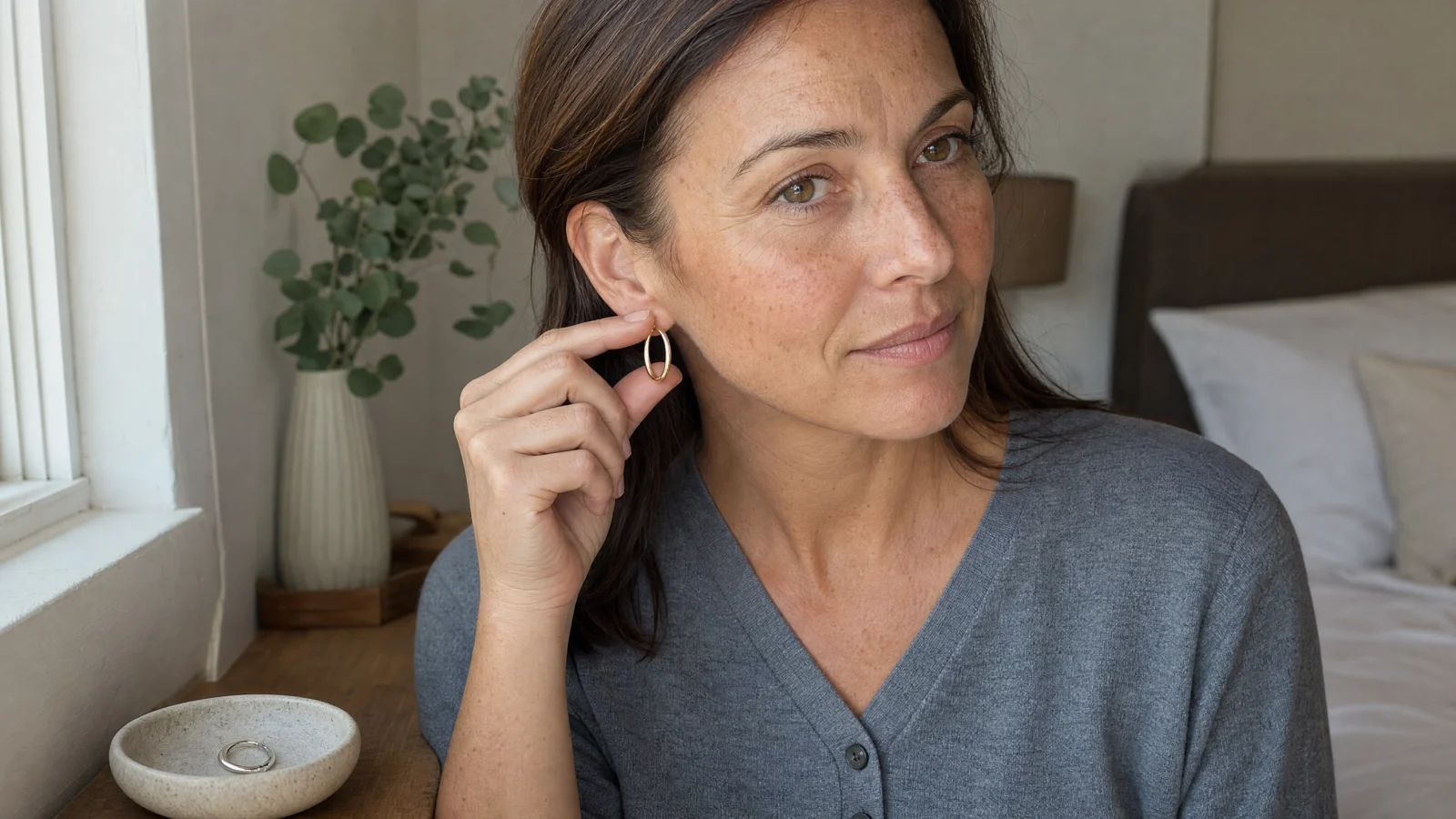
Avoid direct sun and colored lamps.Look at your face.
Keep the mirror and your position still.Swap one thing.
Try the next metal in the same place.
Does gold mean warm and silver mean cool?
Your undertone is the warm or cool look beneath the surface of your skin. Gold or silver can give you a clue about it. The test cannot prove your undertone, so compare clothing colors too.
Jen Vax of Your Color Style calls jewelry preference an undertone myth. She points out that outfit color and makeup can affect the result, and that many people suit both metals.
What if both metals look good?
Keep both. You do not need to choose an undertone just to finish the test. A both result may point toward neutral coloring, or the visible difference may be too slight to guide a purchase.
A shiny piece can look different from a dull one. Compare two pieces that are about the same size and shine. This makes the metal color easier to judge.
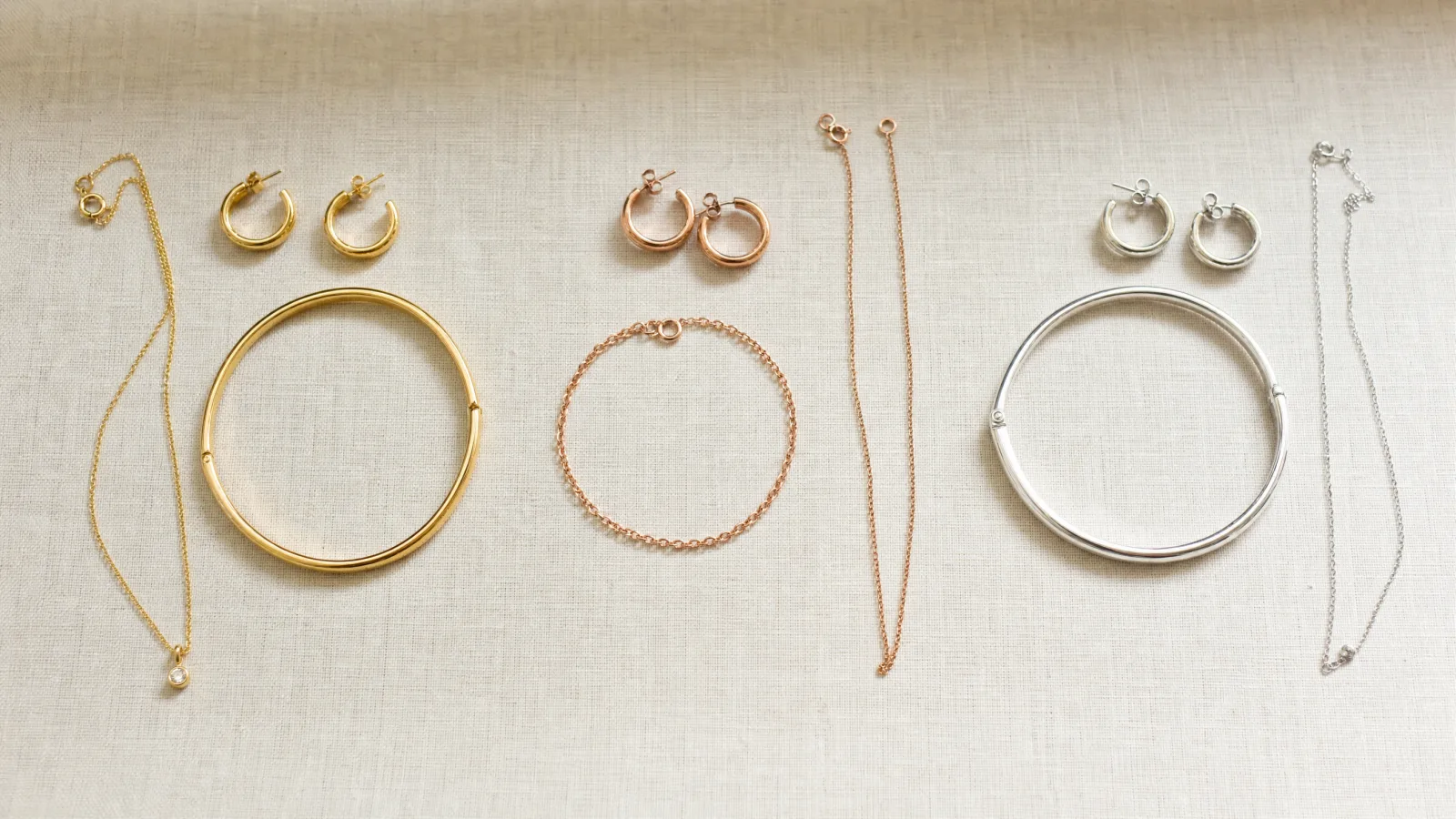
You can enjoy more than one metal. Look at the color, shine and size of the piece with the clothes you plan to wear.
Can cool coloring wear gold?
Yes. Jewelry covers only a small area, and your taste counts. Try a pale gold if strong yellow gold does not look right with your clothes. Test it with the necklines and colors you really wear.
Mixed-metal jewelry is another easy option. It repeats both colors on purpose and lets you wear pieces you already own together. There is no need to replace a collection because one home comparison leaned slightly warm or cool.
Which metal should you buy next?
Test the piece beside the outfit you expect to wear it with. For earrings and short necklaces, check the metal near your face. For rings, watches, and belt buckles, the surrounding clothing may matter more than your undertone.
If you want a quick guided comparison, use the gold or silver tool. If you already have an answer, see how to wear it: gold suits you, silver suits you or both work. For a fuller answer, the free color analysis combines your metal observation with four other answers and gives you a palette with suggested metals. You can choose both or unsure, so there is no reason to invent a clear result.
Think about the rest of the outfit.
A red blouse, blue jacket or teal dress changes the colors around your jewelry. These clothing examples come from the True Winter palette.
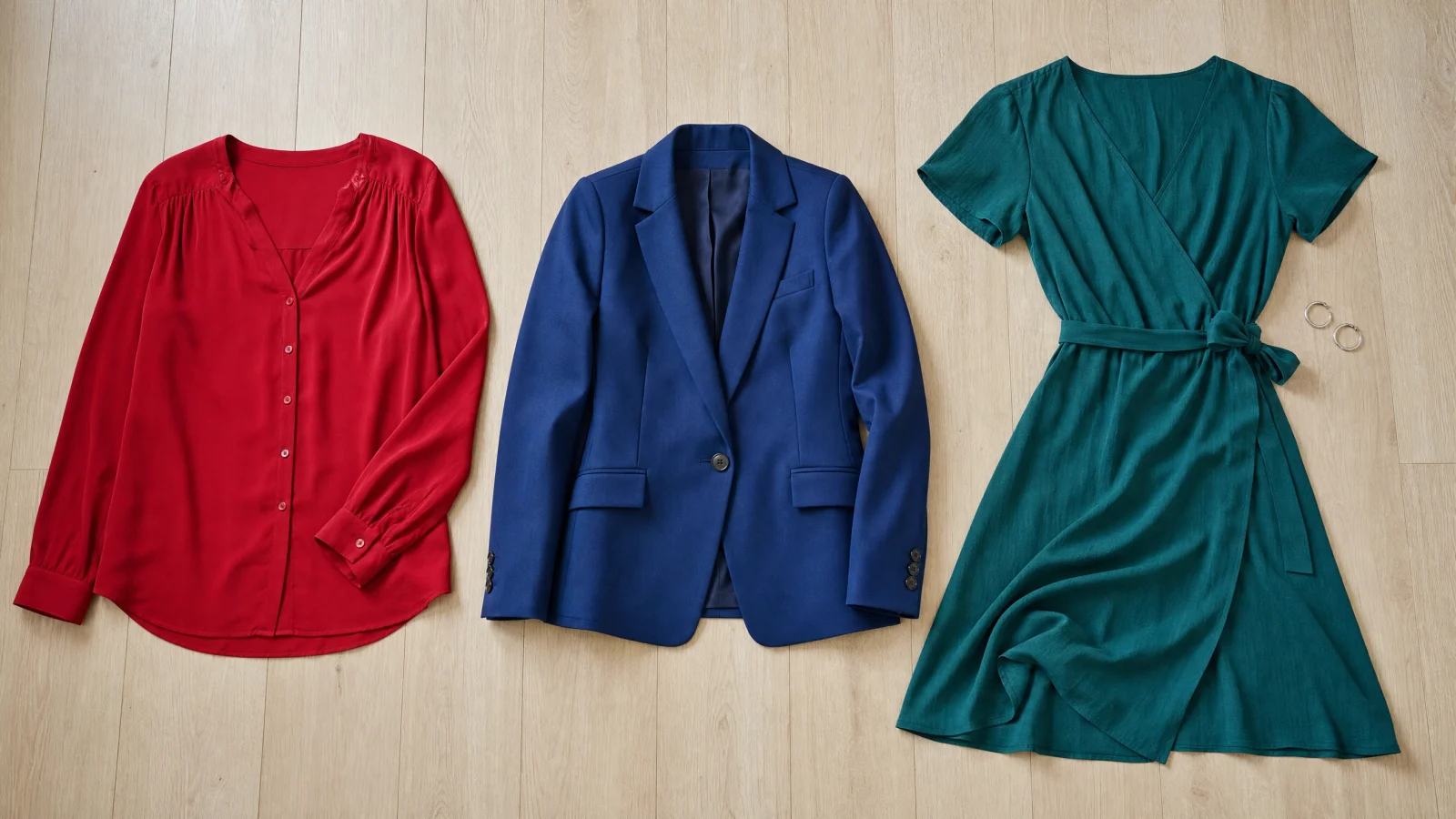
The warm versus cool undertone guide gives you a fabric comparison to try before you spend money on a new piece.
Open the full palette reference
A few more answers
How do you do the gold or silver test?
Choose a gold piece and a silver-colored piece. Pick two that are about the same size and shine. Large matte gold hoops compared with a tiny polished silver stud make the metal color hard to judge. Earrings are convenient, but a necklace or two pieces held beside your jaw will work.
What should you look for?
Look for a result that repeats. One metal may make your skin look more even. The other may make the area around your jaw or mouth look a little yellow or gray. The effect can be subtle. Your favorite metal is still allowed to win when the difference is too small to matter.
Does gold mean warm and silver mean cool?
Your undertone is the warm or cool look beneath the surface of your skin. Gold or silver can give you a clue about it. The test cannot prove your undertone, so compare clothing colors too.