A closer look at undertone
Warm vs cool skin tone: beyond the vein test
Try warm and cool colors beside your face. Learn what to look for, with simple comparisons you can do at home.
Your undertone is the warm or cool look beneath the surface of your skin. Blue veins cannot reliably tell you which one you have. Compare warm and cool clothes beside your face in daylight instead. If both look good, you may be neutral.
Do blue veins mean warm or cool?
Blue veins do not prove that your skin is cool. Veins can look different through different skin colors and in different light. A shirt beside your face gives you something more useful to compare.
Lindsey Myers of Created Colorful recommends skipping the vein test. Looking at your wrist does not show what a shirt will look like beside your face.
What do warm and cool look like?
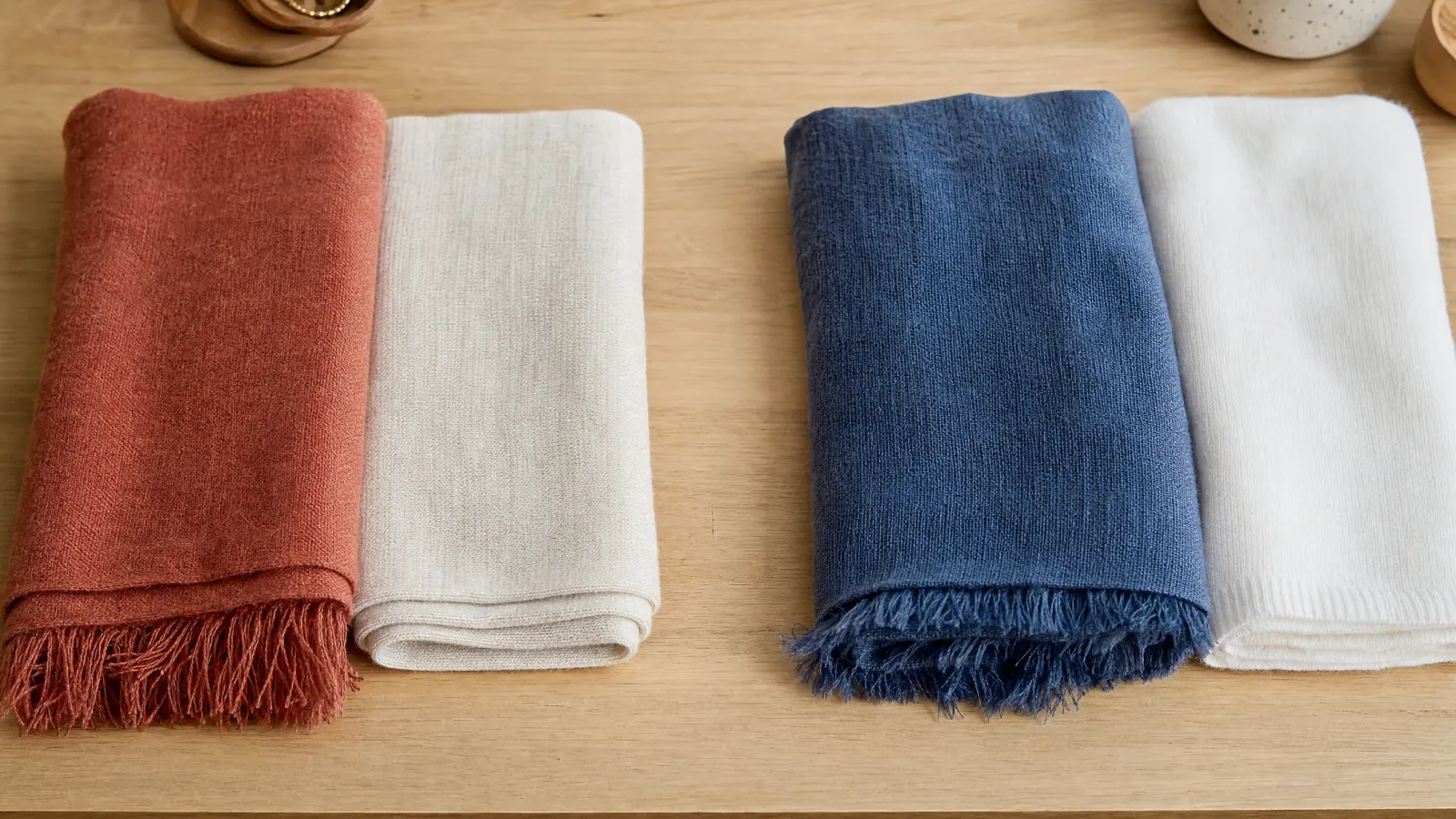
The rusty orange and warm browns on the left look different from the blues and purples on the right.
Soft Autumn
Soft Summer
Colors from the Stef's Closet season palettes. Compare actual fabrics in daylight to see which ones you like near your face.
How do you compare warm and cool colors?
Pick one warm top or scarf and one cool one. Warm colors lean yellow, like cream and tomato red. Cool colors lean blue, like bright white and berry red. Try to choose two colors that are about the same lightness.
- Stand near a window during the day, out of direct sun.
- Cover the color you are wearing with a neutral towel or top.
- Hold the warm fabric beneath your chin, then replace it with the cool one.
- Repeat the switch and keep your position the same.
Daylight is useful because lamps can make colors look more yellow or blue. Keep both fabrics in the same light so the comparison is fair.
Same light. Same spot. Change the fabric.
Face a window with soft daylight. Compare one fabric at a time, keeping everything else the same.
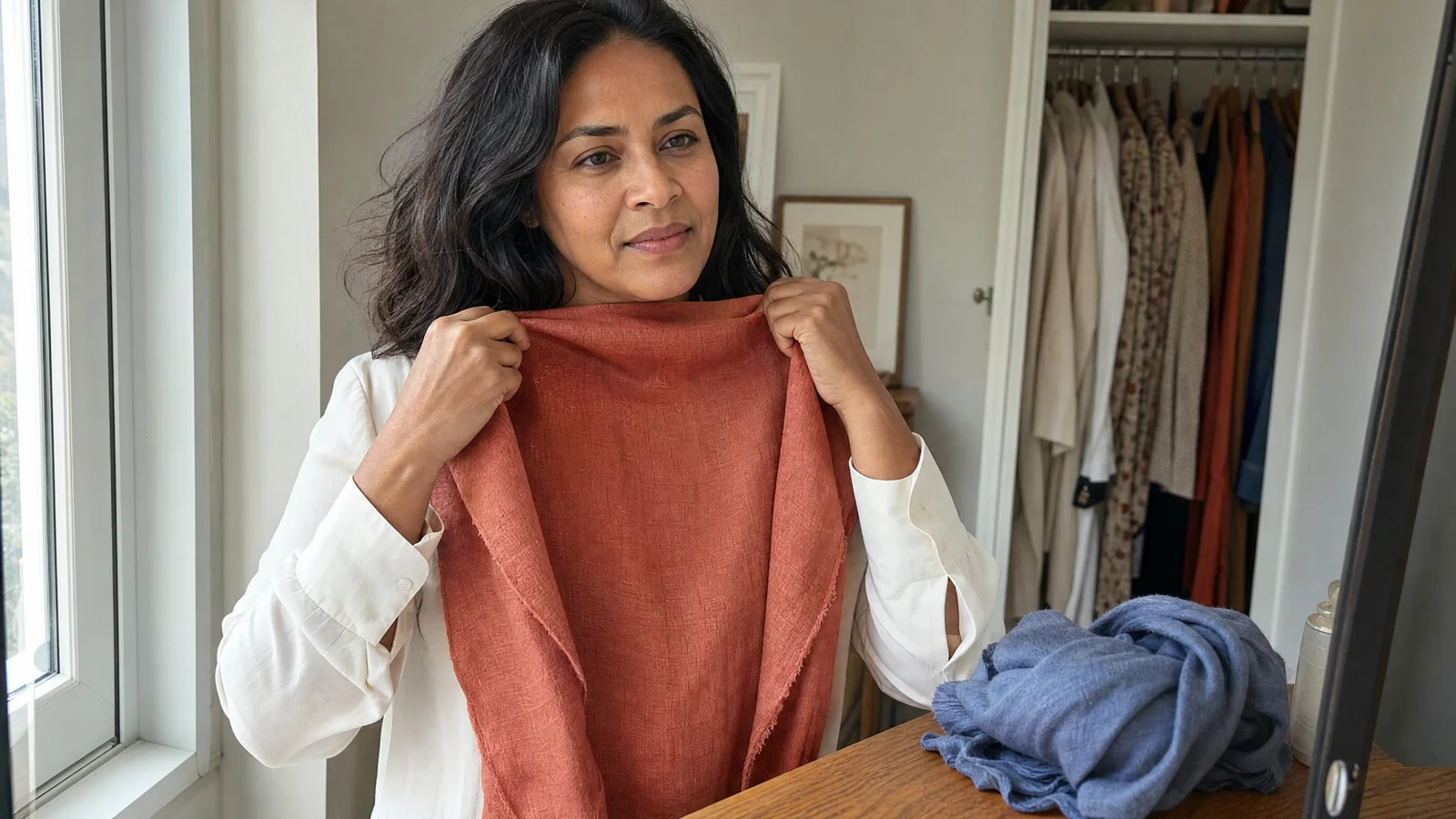
Avoid direct sun and colored lamps.Look at your face.
Keep the mirror and your position still.Swap one thing.
Try the next fabric in the same place.
What should you look for in the mirror?
Look at your face instead of deciding which fabric is prettier. See if one color makes the skin beneath your chin look yellow or gray. Does it make patches of red or uneven color easier to see? Then switch back and see if the difference repeats.
If the warm fabric looks better, you may have a warm undertone. If the cool fabric looks better, you may have a cool one. This home test is only a clue. Do not force an answer if the change is too small to see twice.
Can gold and silver confirm your result?
They can give you a second comparison. Hold yellow gold and silver near your jaw in the same daylight. Judge the effect on your face, not which metal you own or wear most often.
Jen Vax of Your Color Style says jewelry preference is not an accurate undertone test and notes that many people suit both metals. If fabric and jewelry give you different answers, keep both results open and test another pair of tops.
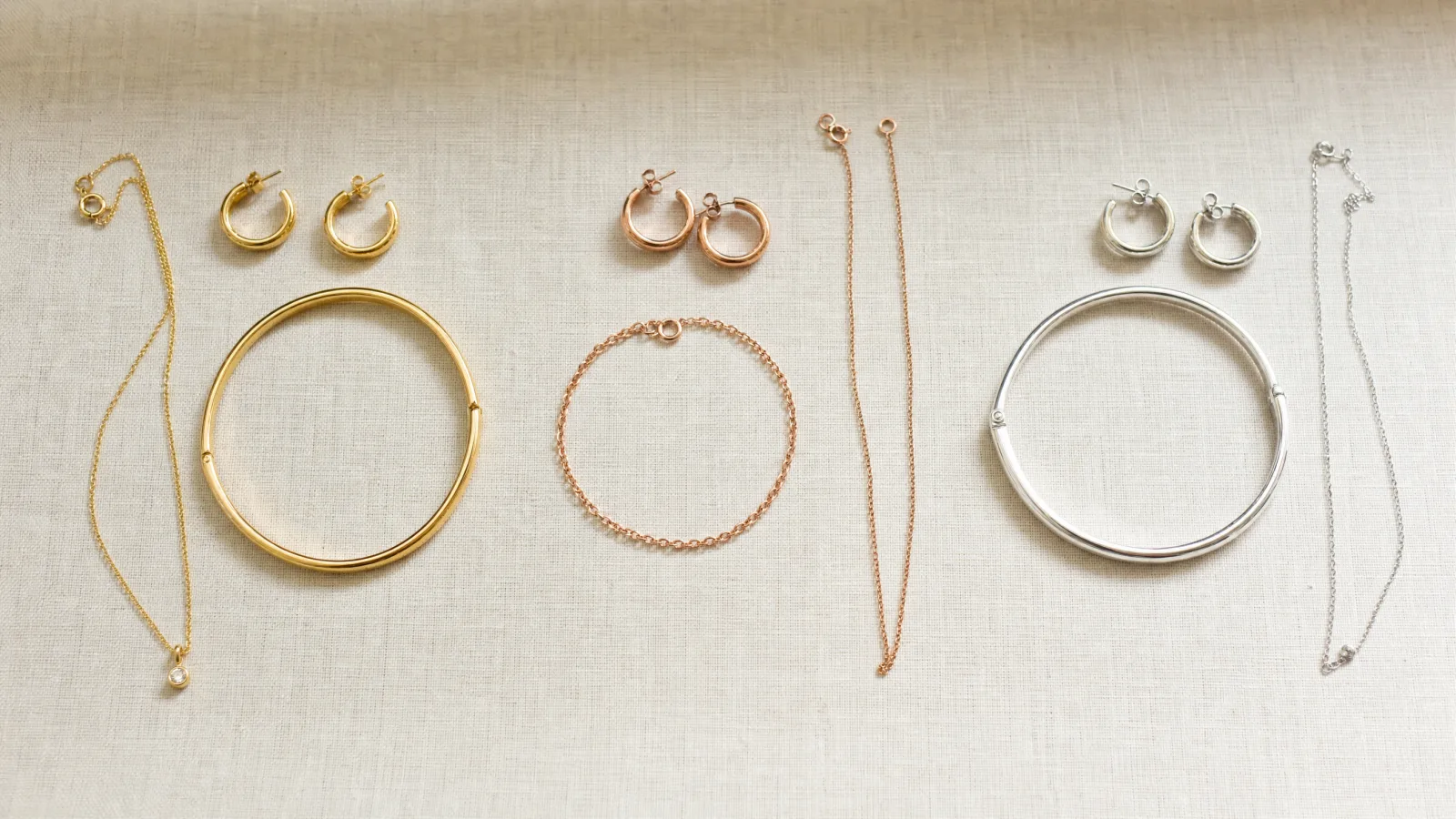
Try metals you already own. It is fine if you like both gold and silver beside your face.
What if warm and cool both look good?
Mixed results do not mean you did the test badly. You may be neutral, which means your skin does not look clearly warm or cool. The two fabrics may also be too different in other ways.
Try another pair before buying anything. Do not compare a pale peach with a dark plum. One is much lighter than the other. Two reds or two whites that are about the same lightness will be easier to judge.
How does undertone fit into color analysis?
Undertone is one part of color analysis. The free color analysis also asks about your natural hair, eyes, how light or dark your skin is, and whether your own coloring looks bright or soft. You can choose neutral or unsure when a warm-or-cool answer would be a guess.
Use the resulting palette for another closet test. Put two or three suggested colors near your face, compare them with shades you already avoid, and keep the part of the result you can see for yourself. The undertone tool and gold or silver tool offer quicker comparisons if you are not ready for the full quiz. If you already know your answer, read what it means for your clothes: warm undertone, cool undertone or neutral undertone.
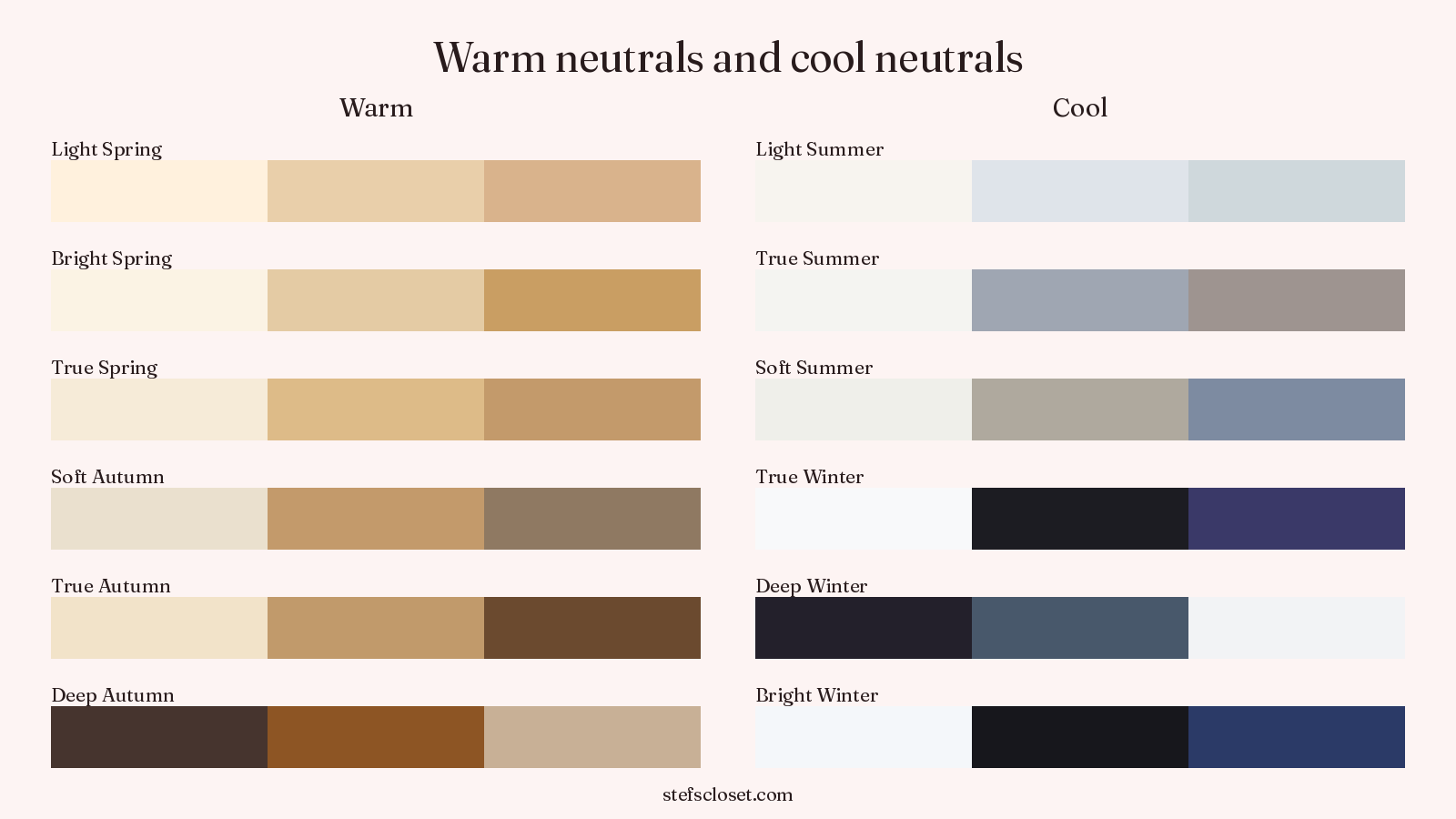
Compare two example palettes.
Both groups have soft colors. One leans warm and the other leans cool. Try real clothes to see which shades you like near your face.
Soft Autumn
Soft Summer
Close season matches can differ in more than warmth. The Soft Autumn and Soft Summer comparison shows how light, dark, bright, and soft colors can change the answer.
The color analysis guide brings the home comparisons together if you want to keep testing with clothes you already own.
Open the full palette reference
A few more answers
Do blue veins mean warm or cool?
Blue veins do not prove that your skin is cool. Veins can look different through different skin colors and in different light. A shirt beside your face gives you something more useful to compare.
How do you compare warm and cool colors?
Pick one warm top or scarf and one cool one. Warm colors lean yellow, like cream and tomato red. Cool colors lean blue, like bright white and berry red. Try to choose two colors that are about the same lightness.
What should you look for in the mirror?
Look at your face instead of deciding which fabric is prettier. See if one color makes the skin beneath your chin look yellow or gray. Does it make patches of red or uneven color easier to see? Then switch back and see if the difference repeats.