The pale summer border
Light summer vs soft summer: how soft is your coloring?
Two cool palettes, one pale and clean, one dusty and deeper. See which answer fits your coloring, then test it with a top you already own.
Both seasons are cool, and a light person can land in either, so the deciding question is chroma: how soft and hazy or how clear your coloring reads. A light, cool person with soft, hazy coloring is Soft Summer. The same person with in-between coloring is Light Summer.
Chroma means how bright or gray a color looks. Clear color has more strength. Soft color looks as though a little gray has been mixed into it. In-between chroma sits between those two ends.
A fair comparison keeps depth still while changing only chroma.
Two cool summers, and the difference is the haze.
Both examples have cool, ashy hair. Look past how light or dark it is and at whether the whole face reads clean or softly blended.

Pale all through, and cool with it.
- Ash blonde hair and gray-blue eyes.
- Nothing in her face is dark, and the coolness is easy to see.
Light Summer keeps that paleness and leans cool. Try Powder Blue and Wisteria.

Cool and softly blended.
- Ash-brown hair and smoky gray-blue eyes.
- The overall effect is soft rather than bright.
That cool, soft mix is the idea behind Soft Summer. Try Dusty Plum and Steel Blue.
These are example color patterns. A season includes many skin tones and eye colors. You do not need to look like the example. Hair and eyes give clues; compare fabrics near your face before choosing a season.
What separates Light Summer from Soft Summer?
Chroma separates them when your coloring is light and cool. Depth means how light or dark your coloring looks as a whole. Lightness alone cannot settle this pair because Soft Summer can also begin at light depth.
The site's season rules were run on October 1, 2026, across every hair color, eye color and contrast value. A light cool input with soft chroma always returned Soft Summer. An in-between chroma answer always returned Light Summer when the other inputs stayed the same.
A clear answer did not return Light Summer. It sent a light cool person to Bright Winter or True Winter. Soft Summer was also possible at medium depth, while Light Summer appeared only at light depth.
That order matters. The softness answer is read before light depth. A very pale person with hazy coloring can still be Soft Summer in these rules.
The question the free color analysis settles here is how soft or clear your coloring reads. It asks that directly in its last question, instead of guessing it from your hair. Warmth comes from an earlier question, which asks which metal makes your face look brighter, gold or silver.
What does Light Summer look like?
For Light Summer, your depth is light. Your coloring is cool, and its chroma reads in between rather than very soft or very clear. That last part keeps the result out of both Soft Summer and winter.
The colors in the pack are pale tints. A tint is a color made lighter toward white. You get that paleness as part of the result, even though lightness was not what split two light people in the first place.
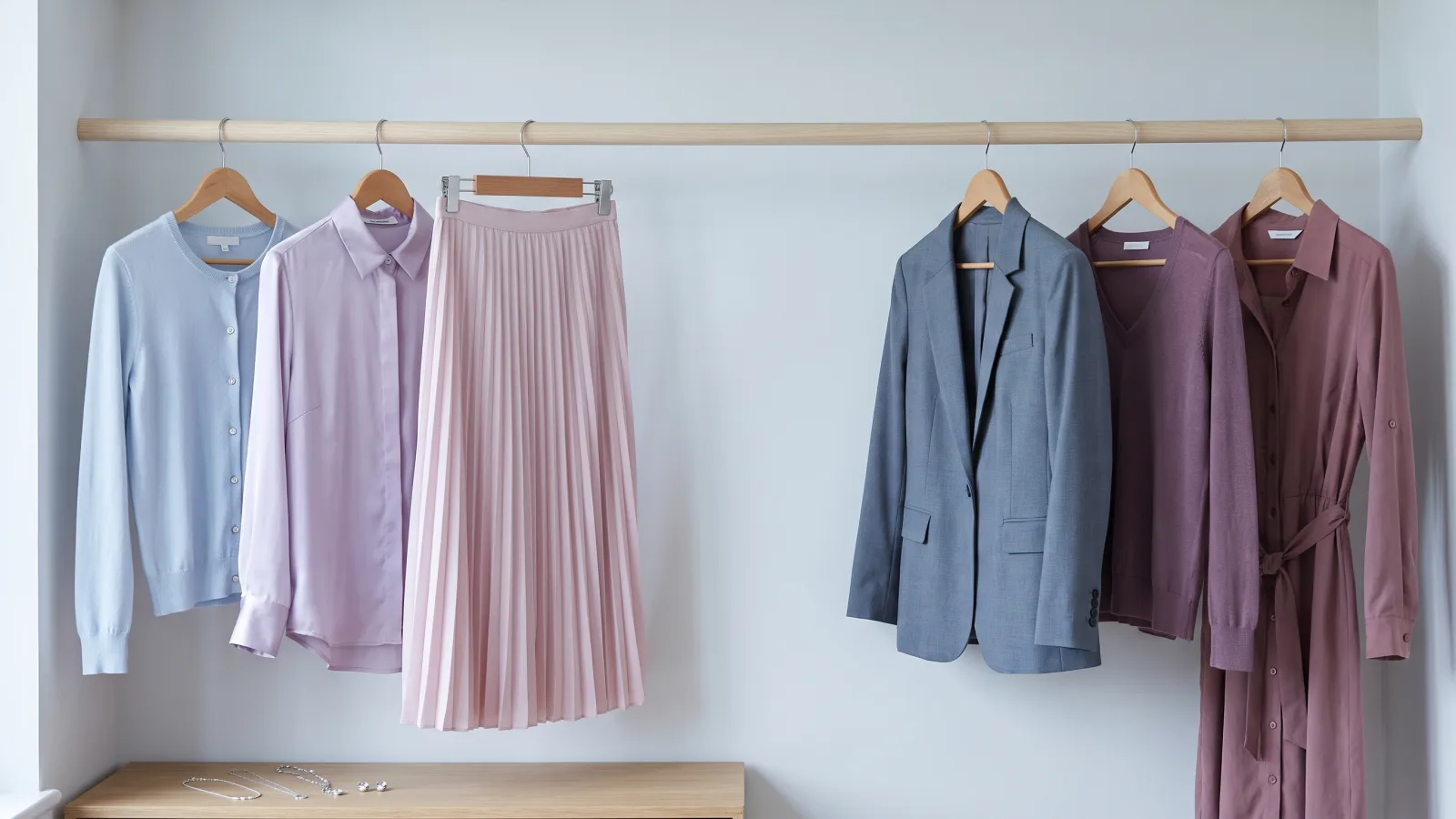
Pale and cool, kept close to white.
Three ordinary pieces in the Light Summer colors named underneath. The fabric sits near those palette colors rather than matching them exactly.
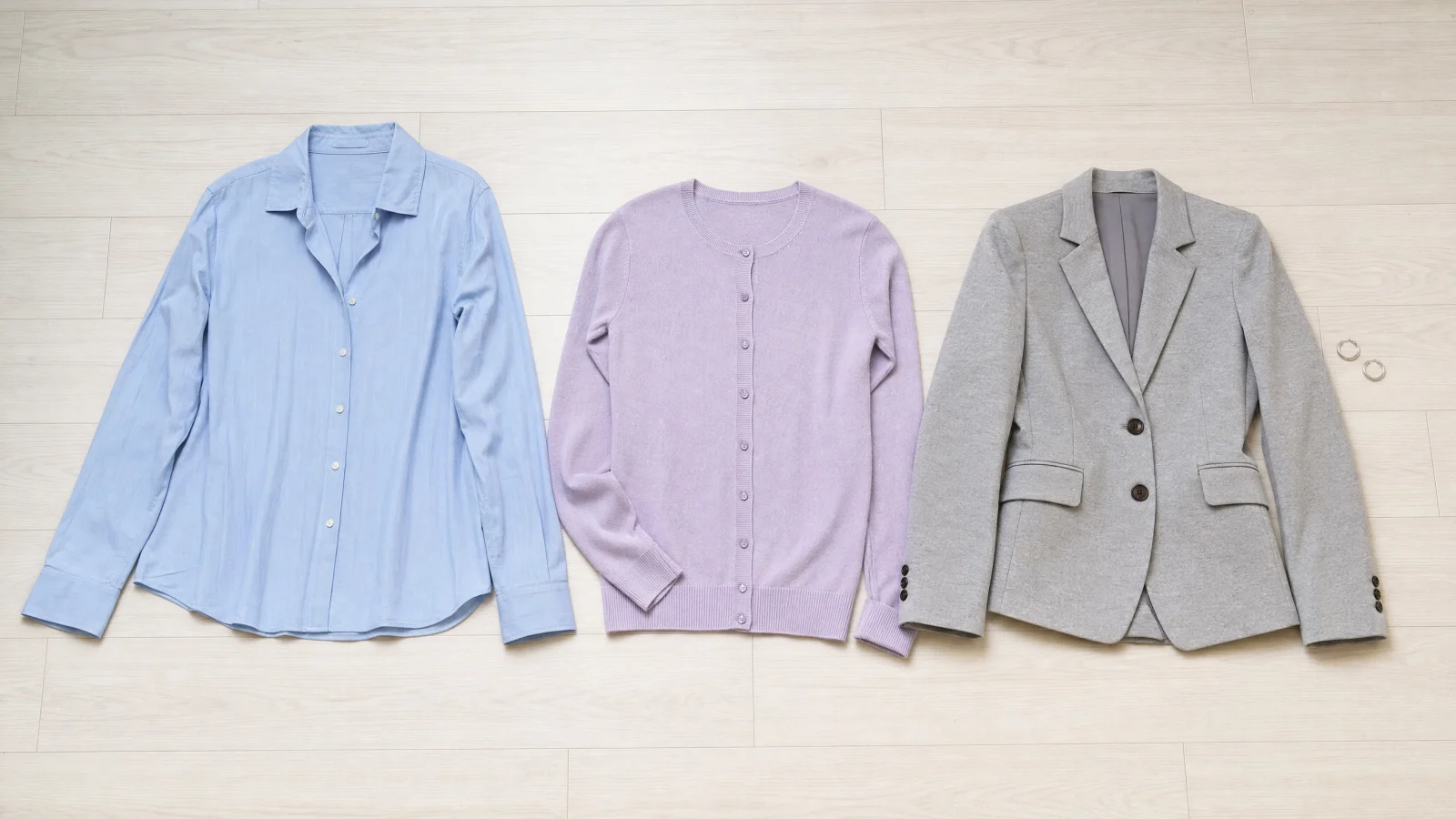
The Light Summer guide shows the complete set. If Light Spring is also in the running, read the Light Spring versus Light Summer guide before choosing a palette.
What does Soft Summer look like?
For Soft Summer, your coloring is cool with soft, hazy chroma. Your depth may be light or medium. Muted is another word for soft here. It means the colors in your features look blended rather than bright.
Alice at Soul of Color describes the same priority with the words "Soft Summer is muted first". That agrees with the site's rule because the muted answer takes priority at any lighter depth.
The same cool family, one step dustier.
The same kind of pieces in Soft Summer colors. Hold one beside a Light Summer piece and the extra weight is easy to see.
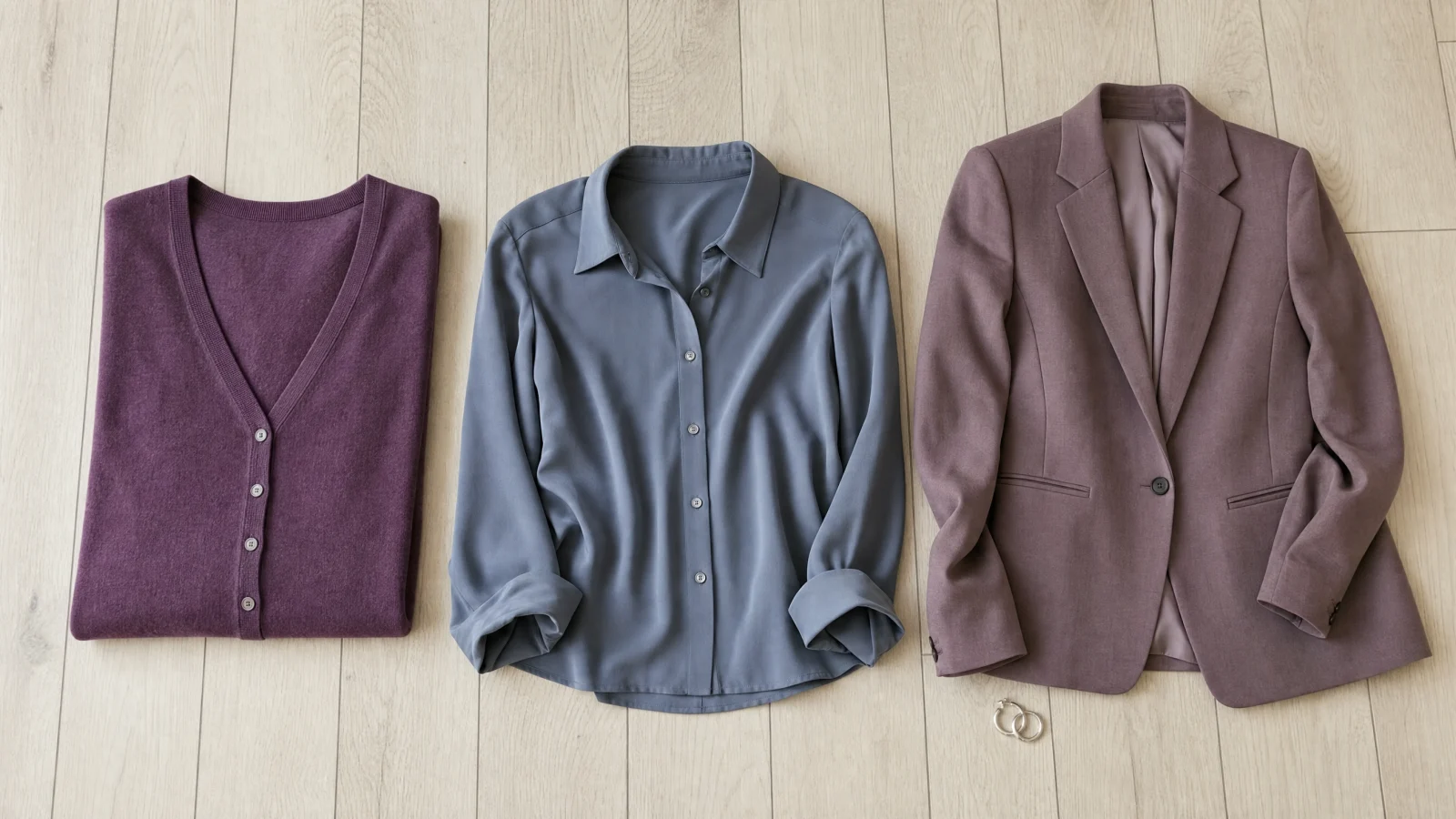
The Soft Summer guide shows its complete palette. If True Summer is also in the running, compare the two in the True Summer versus Soft Summer guide.
Which clues do people get backwards?
Paleness is not the deciding test here. softsummerpalette.com uses a different method. It starts with a grayscale photo and looks at lightness first. Very pale features point toward Light Summer in that method. More visible depth points toward Soft Summer.
That lightness-first test is useful for understanding why the palettes look different. It does not match the order used by the site's rules. Here, a light person who answers soft and hazy reaches Soft Summer, and how pale they are never decides it.
The page's finished palette comparison uses pale tints beside medium tones. That part matches the pack numbers here. A tint sits closer to white. A tone has more visible depth. The disagreement concerns the first question used to classify your coloring, not the visible lightness difference between the two finished palettes.
Hair and contrast cannot settle the choice either. In the full check of the rules, neither one moved a light cool input between these two seasons. They may change how you describe your features, but the chroma answer still made this choice.
A photograph of light hair cannot settle it. Hair helps build the depth input, but the split between these two results still comes from chroma.
A warmth test cannot split the pair because both results are cool. Gold or silver can help establish the cool direction. Once that part is settled, compare softness with clarity.
How do the two palettes look side by side?
The pack numbers explain why the palette cards can look misleading. The CIELAB lightness scale puts black at 0. White sits at 100. The Light Summer pack averages about 85. The Soft Summer pack averages about 68.
Their average chroma is close. This does not show that the Soft Summer pack is measurably grayer or lower in chroma. The deciding answer is about your coloring. The palette you receive differs mostly in depth.
Pale tints on one side, dusty mid-tones on the other.
Both sets are cool. The left column stays close to white. The right column sits deeper, which is why it reads dusty.
Light Summer
Soft Summer
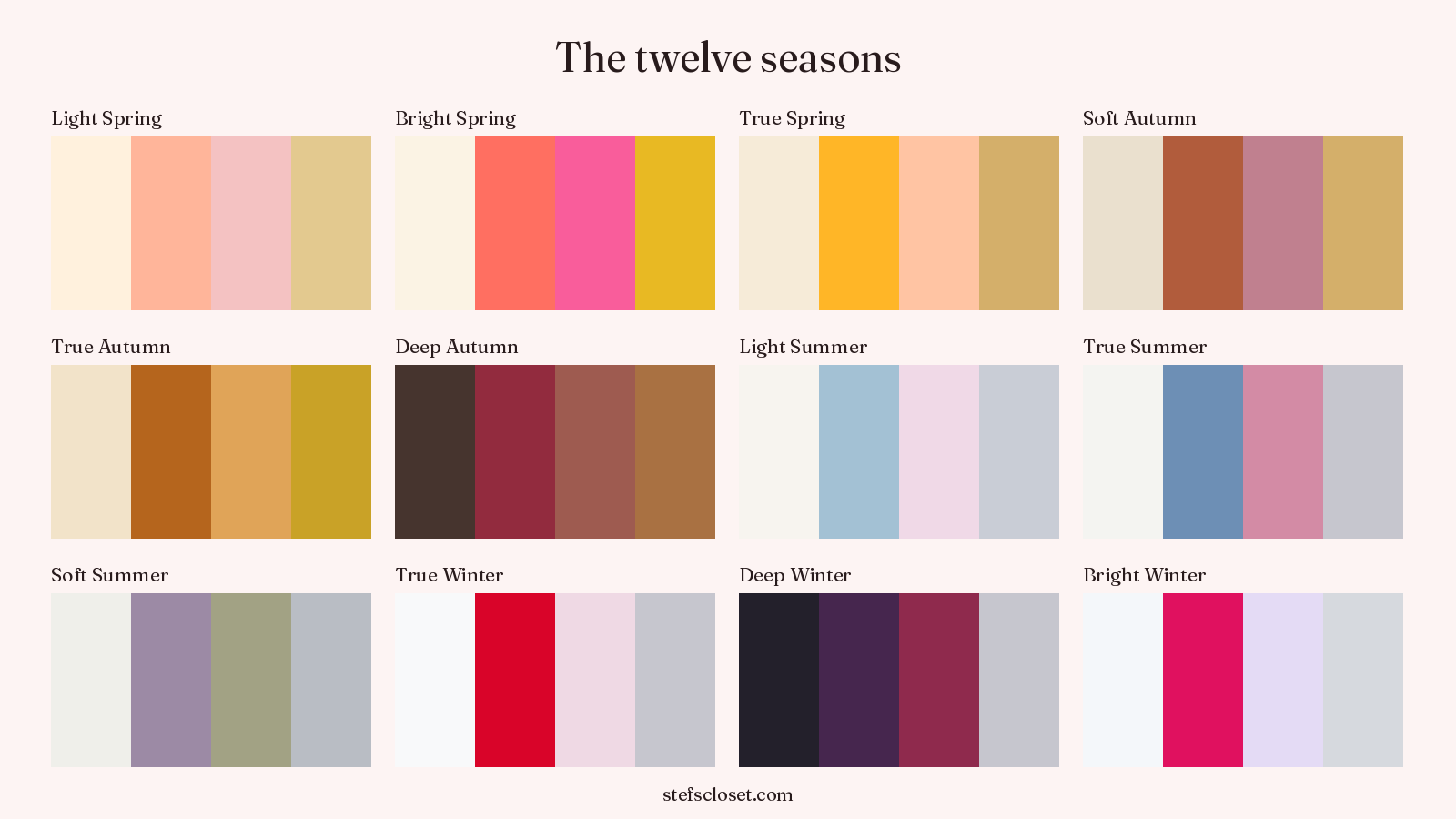
Colors from the Stef's Closet season palettes. Compare actual fabrics in daylight to see which ones you like near your face.
Pale color with low chroma looks pastel. A medium-depth color with low chroma looks dusty. That is why the two packs can look like a chroma difference when the measured gap is mostly depth. See where both groups fit in the 12-season system.
How can I test Light Summer against Soft Summer at home?
Keep depth still and change chroma alone. Use two fabrics you already own at about the same lightness. Find one clear powder pink and one dusty rose. Do not compare the palette-card versions because those differ too much in depth.
Same light. Same spot. Change the fabric.
Face a window with soft daylight. Compare one fabric at a time, keeping everything else the same.
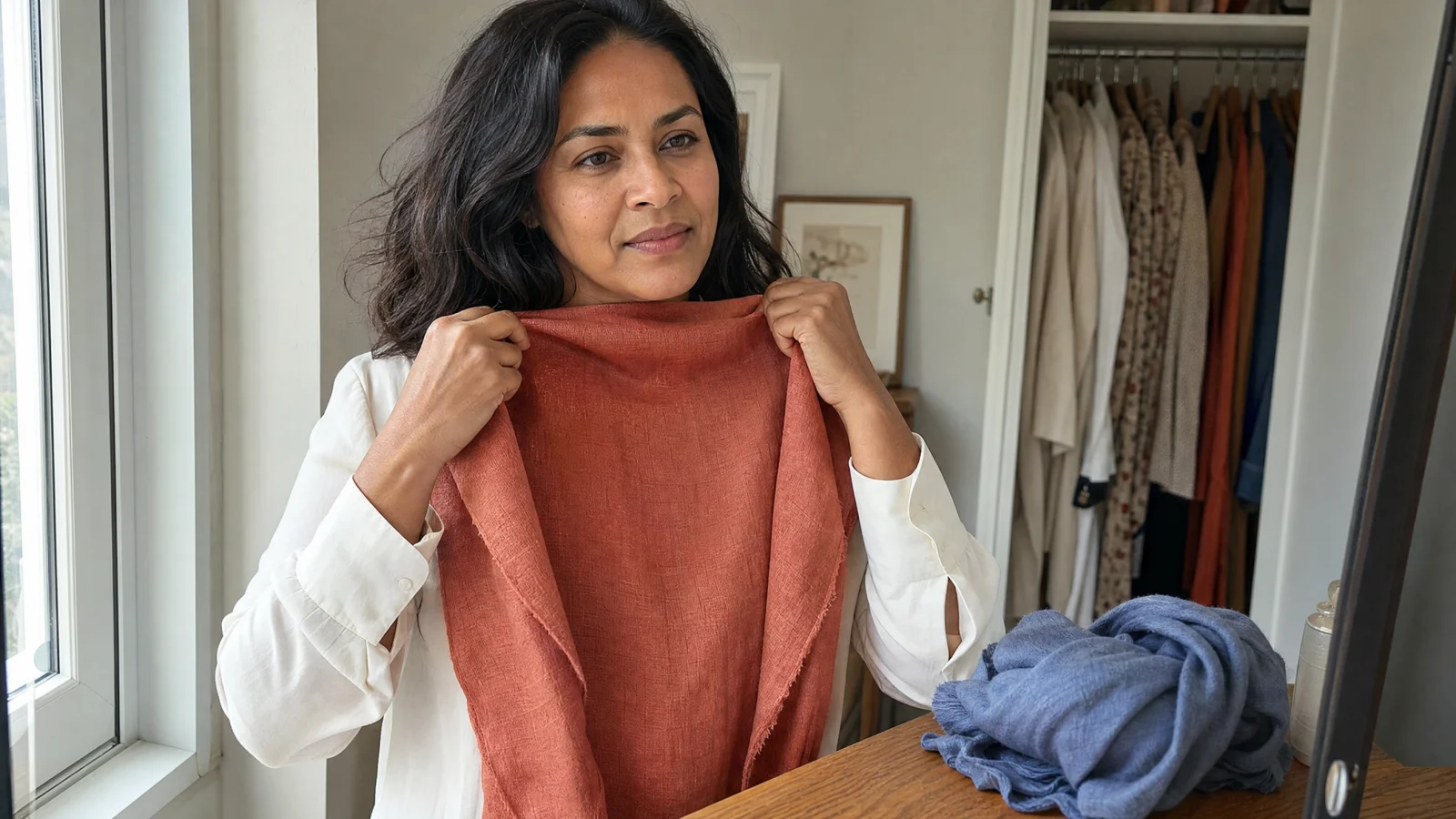
Avoid direct sun and colored lamps.Look at your face.
Keep the mirror and your position still.Swap one thing.
Try the next fabric in the same place.
- Stand at a window in daylight.
- Hold the clear powder pink under your chin.
- Look at your skin rather than the cloth. Check whether your skin looks even or washed out.
- Swap in the dusty rose without changing your place.
- Repeat the swap once so a passing change in daylight does not set the result.
If your skin looks more even beside the clear powder pink, Light Summer is the better result of this test. If your skin looks more even beside the dusty rose, Soft Summer is the better result. If both seem wrong, do not force either label from this pair.
Can the quiz settle the choice?
It can give you a starting point. The last of its five questions asks whether your natural colors look bright, or softer. For a light, cool person, "In between" gives Light Summer, "Soft and hazy" gives Soft Summer, and "Bright and clear" gives a winter season. Answer it after the fabric test, not before, so you are describing what you saw rather than what you hoped.
Tomorrow, compare clear powder pink with dusty rose under your chin in window daylight.
Open the full palette reference
A few more answers
What separates Light Summer from Soft Summer?
Chroma separates them when your coloring is light and cool. A light, cool person with soft, hazy coloring is Soft Summer. The same person with in-between coloring is Light Summer.
Which clues do people get backwards?
Paleness is not the deciding test here. Hair and contrast cannot settle the choice either, and a warmth test cannot split the pair because both results are cool.
How can I test Light Summer against Soft Summer at home?
Use two fabrics you already own at about the same lightness, one clear powder pink and one dusty rose. Hold each under your chin at a window in daylight and watch your skin rather than the cloth.