The summer border
True summer vs soft summer: which are you?
Two cool palettes, one clearer and one grayer. See where the line falls, then test it with a shirt you already own.
Temperature does not separate True Summer from Soft Summer, because both are cool. Mutedness separates them, and it does that whatever your contrast. True Summer holds more color. Soft Summer is the grayer of the two.
Same three families. One side holds more color.
Each True Summer color sits beside its nearest Soft Summer relative. The left column keeps more color. The right column looks grayer and hazier.
True Summer
Soft Summer
Colors from the Stef's Closet season palettes. Compare actual fabrics in daylight to see which ones you like near your face.
What separates True Summer from Soft Summer?
Mutedness is the deciding difference. In color analysis, mutedness means how much gray you see in a color. True Summer is cool first with some softness. Soft Summer is muted first and remains cool.
Hannah and Sophia Rashad, the sisters who run Curate Your Style, describe a common trap: "A true summer vs soft summer test has to compare mutedness, not simply whether a shade is cool."
They say True Summers sometimes choose Soft Summer because they dislike very bright colors. That only tells you bright color is wrong. It does not tell you how much softness you need. As of September 2026, Curate Your Style says on the same page that it has carried out more than 30,000 analyses across 116 countries. That is the studio's own count of its own work rather than an independent one.
In My Tone opens by saying temperature and depth hold the answer. Both seasons are cool, and their depth ranges overlap. Its own clarity row then gives both seasons the same value, Muted. That leaves the reader with no test.
The free color analysis uses this difference. The question the quiz settles here is how clear or soft your coloring reads. It asks that directly instead of guessing it from your hair.
Is mutedness the same as contrast?
No. Contrast is how light your hair is against your skin. Mutedness is how gray a color is. A woman with dark hair and pale skin can still be soft.
You might see a strong light-to-dark difference in the mirror and still need hazy color. You might see very little difference and still look better with more color in it. Hair depth cannot answer the mutedness question by itself.
Two summers, and the difference is not the hair.
Both examples have brown hair at a similar depth. Look past the hair and at how blended the whole face looks. That blending is the thing the palettes answer.

Cool color, held a little clearer.
- Cool ash-brown hair and smoky gray-green eyes.
- Her hair sits a step darker than her skin.
True Summer stays cool and keeps more color. Try French Blue and Raspberry Rose.

Cool and softly blended.
- Ash-brown hair and smoky gray-blue eyes.
- The overall effect is soft rather than bright.
That cool, soft mix is the idea behind Soft Summer. Try Dusty Plum and Steel Blue.
These are example color patterns. A season includes many skin tones and eye colors. You do not need to look like the example. Hair and eyes give clues; compare fabrics near your face before choosing a season.
Curate Your Style reads contrast as part of chroma, which is the measure behind clear or muted color. The engine here keeps the two apart, because one measures a light-to-dark difference and the other measures grayness. That is a difference in method, not a claim that either way is wrong.
What does True Summer look like?
If you are True Summer you will usually look better in cool colors that keep more of their color. The palette is still soft. It just does not go as gray as Soft Summer does.
Cool color, still clear enough to read.
Three ordinary pieces in the True Summer colors named underneath. The fabric sits near those palette colors rather than matching them exactly.
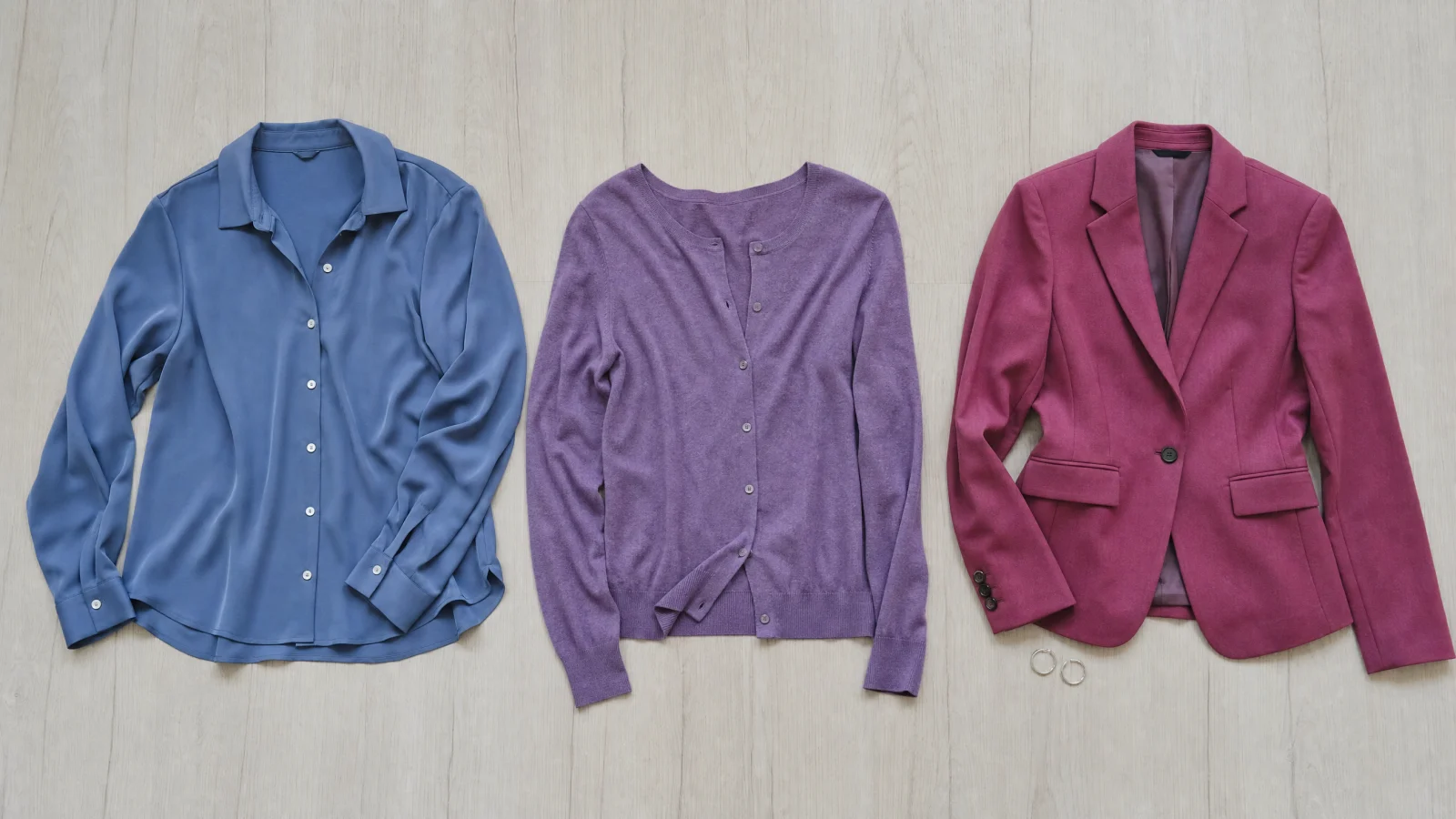
See the whole set in the True Summer guide. Its sister season is True Winter, so the winter color palette can help you see why a clearer cool blue sometimes beats a hazier one.
What does Soft Summer look like?
If you are Soft Summer you will usually look better in cool colors with more gray in them. Everything sits closer together. Clearer cool shades can start to look stark on you, or need heavier makeup to sit right.
The same cool family, one step grayer.
The same kind of pieces in Soft Summer colors. Hold one beside a True Summer piece and the extra gray becomes easy to see.
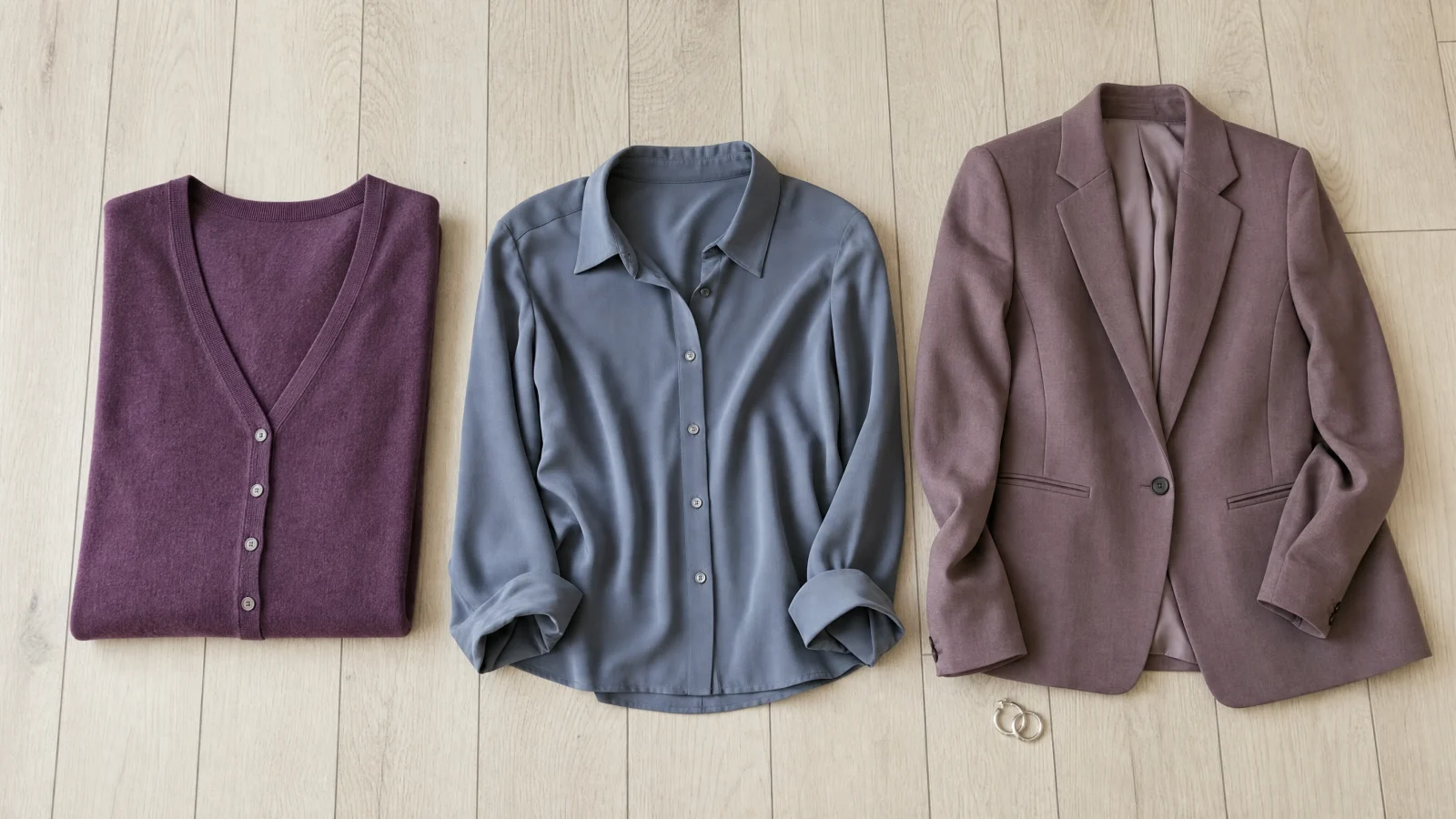
The Soft Summer guide shows the full group together. Soft Autumn is its sister season, and the soft autumn versus soft summer guide covers that other border, where warmth is what decides it.
How do the two color sets differ?
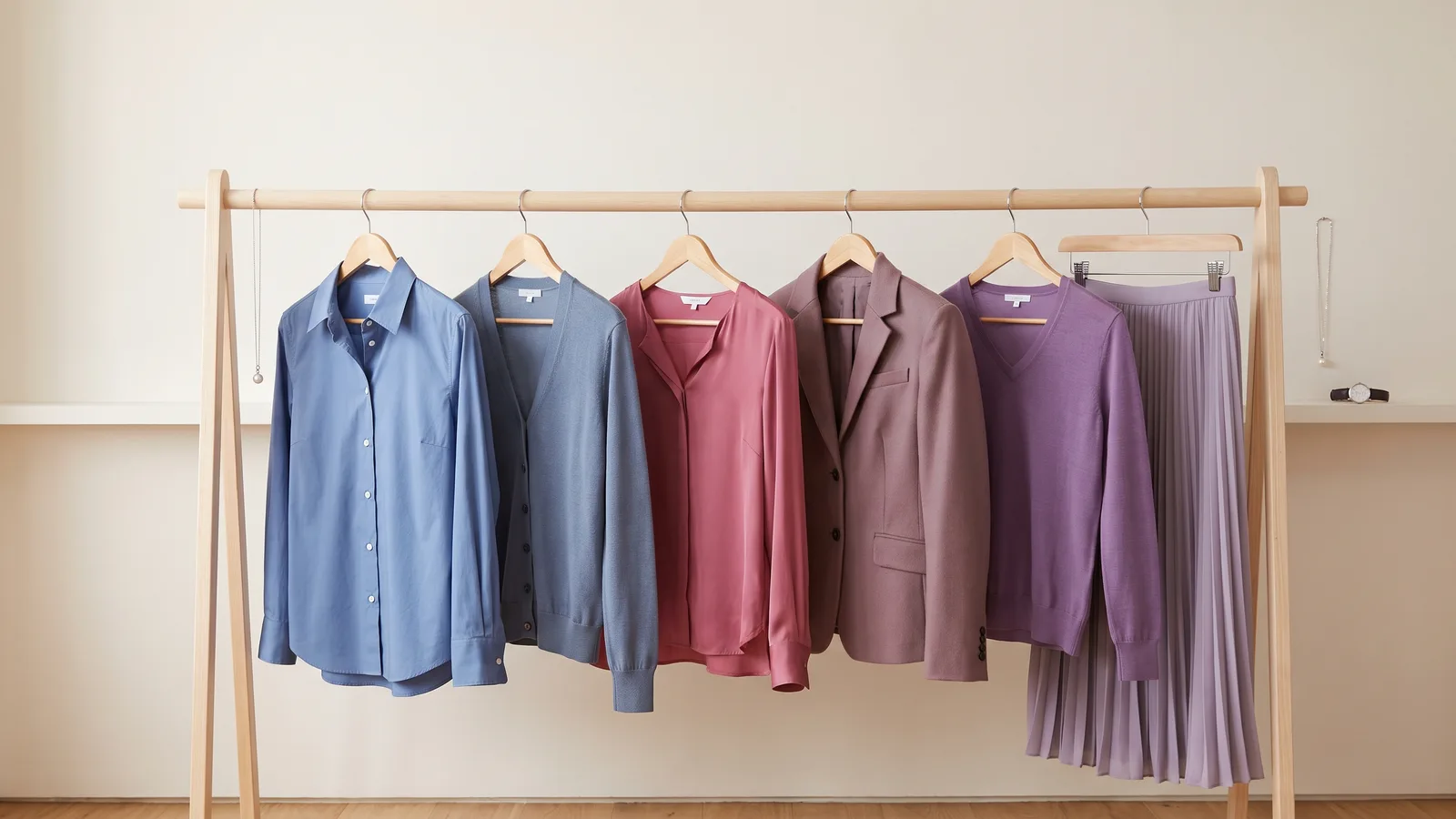
The nine clothing colors in each set.
Compare the two columns as groups rather than picking favorites out of them. The metals are listed in the full palette guides.
True Summer
Soft Summer
Colors from the Stef's Closet season palettes. Compare actual fabrics in daylight to see which ones you like near your face.
Pewter appears in both sets. One shared metal does not make the palettes interchangeable. When the whole groups look equally plausible, go back to one pair and test it properly.
How can I test True Summer against Soft Summer at home?
Compare French Blue with Steel Blue near a window. Both are cool and close in lightness. French Blue holds more color. Steel Blue is grayer.
Same light. Same spot. Change the fabric.
Face a window with soft daylight. Compare one fabric at a time, keeping everything else the same.

Avoid direct sun and colored lamps.Look at your face.
Keep the mirror and your position still.Swap one thing.
Try the next fabric in the same place.
- Stand near a window in daylight and take off any strong makeup.
- Hold the French Blue piece under your face. Use whatever you own that comes closest.
- Look at your face rather than the fabric. Watch whether your skin looks even or washed out.
- Swap in the Steel Blue piece in the same spot, keeping the light the same.
- Choose True Summer if the grayer blue leaves you looking drained, and Soft Summer if the clearer blue looks stark on you.
Do not pick the blue you like best on the hanger. You are watching what happens beside your face. Two more pairs to try later: Amethyst against Misty Lilac, then Raspberry Rose against Rose Smoke.
What if both blues look almost right?
Use the wrong-color check. Alice at Soul of Color says a pale, drained result beside a very cool color points toward Soft Summer. A washed-out result beside a very muted color points toward True Summer.
Her check works best after the blue comparison, not instead of it. It does not make Soft Summer warm. Both seasons stay cool.
This one can be a judgment call in poor light. Put the two blue pieces beside the window tonight, then test them tomorrow in the same spot before you buy anything for either palette.
Open the full palette reference
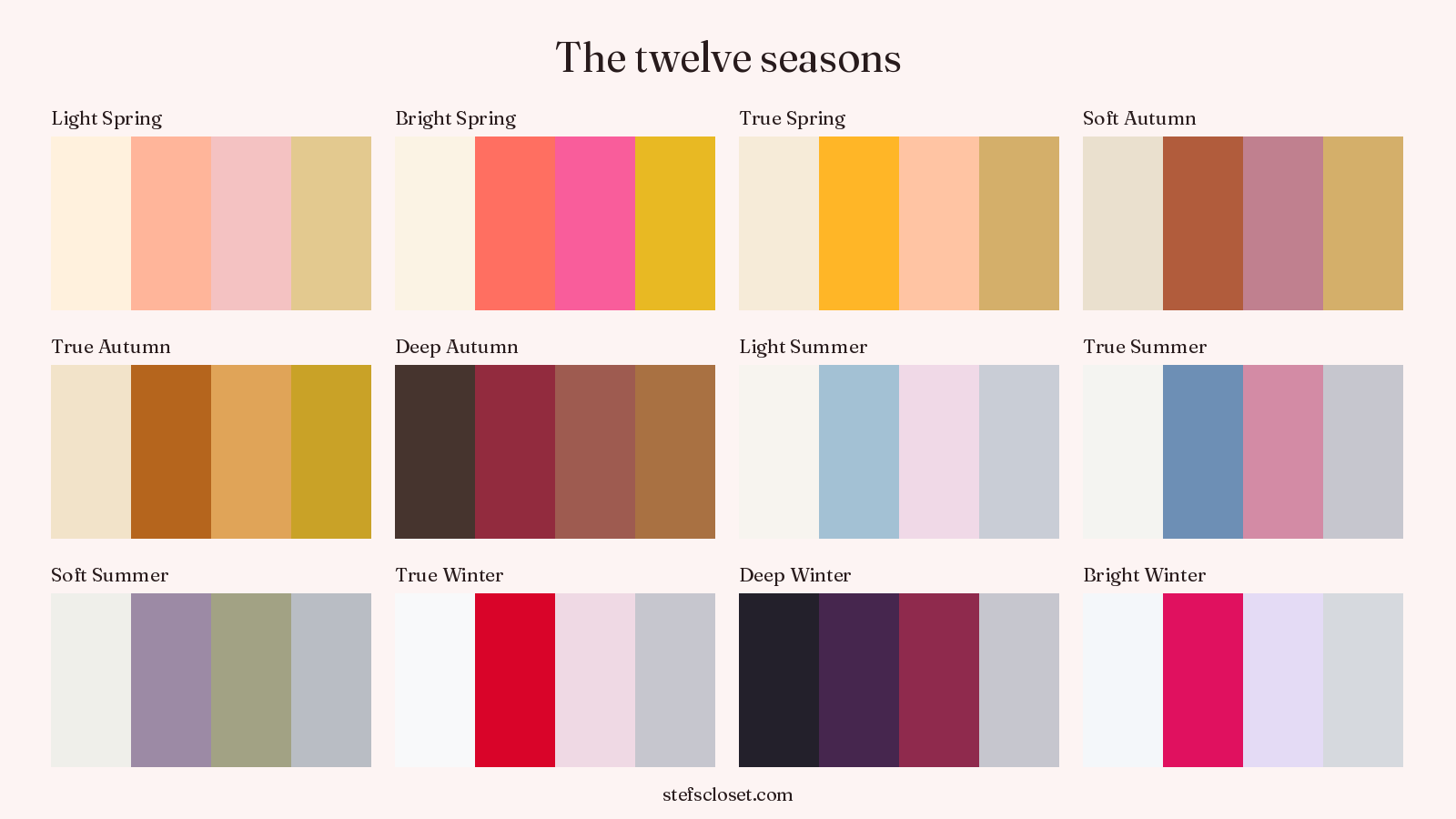
A few more answers
What separates True Summer from Soft Summer?
Mutedness is the deciding difference. In color analysis, mutedness means how much gray you see in a color. True Summer is cool first with some softness. Soft Summer is muted first and remains cool.
Is mutedness the same as contrast?
No. Contrast is how light your hair is against your skin. Mutedness is how gray a color is. A woman with dark hair and pale skin can still be soft.
How can I test True Summer against Soft Summer at home?
Compare French Blue with Steel Blue near a window. Both are cool and close in lightness. French Blue holds more color. Steel Blue is grayer.