Neutral undertone: what it means, and what to wear
A neutral result means your answers do not strongly favor warm or cool. It is a useful answer. You can start by trying colors from both groups.
Next, compare a light top with a dark one. Then try a clear bright color beside a softer, grayish one. Those differences may be easier to spot than warmth. The full color quiz brings these clues together.
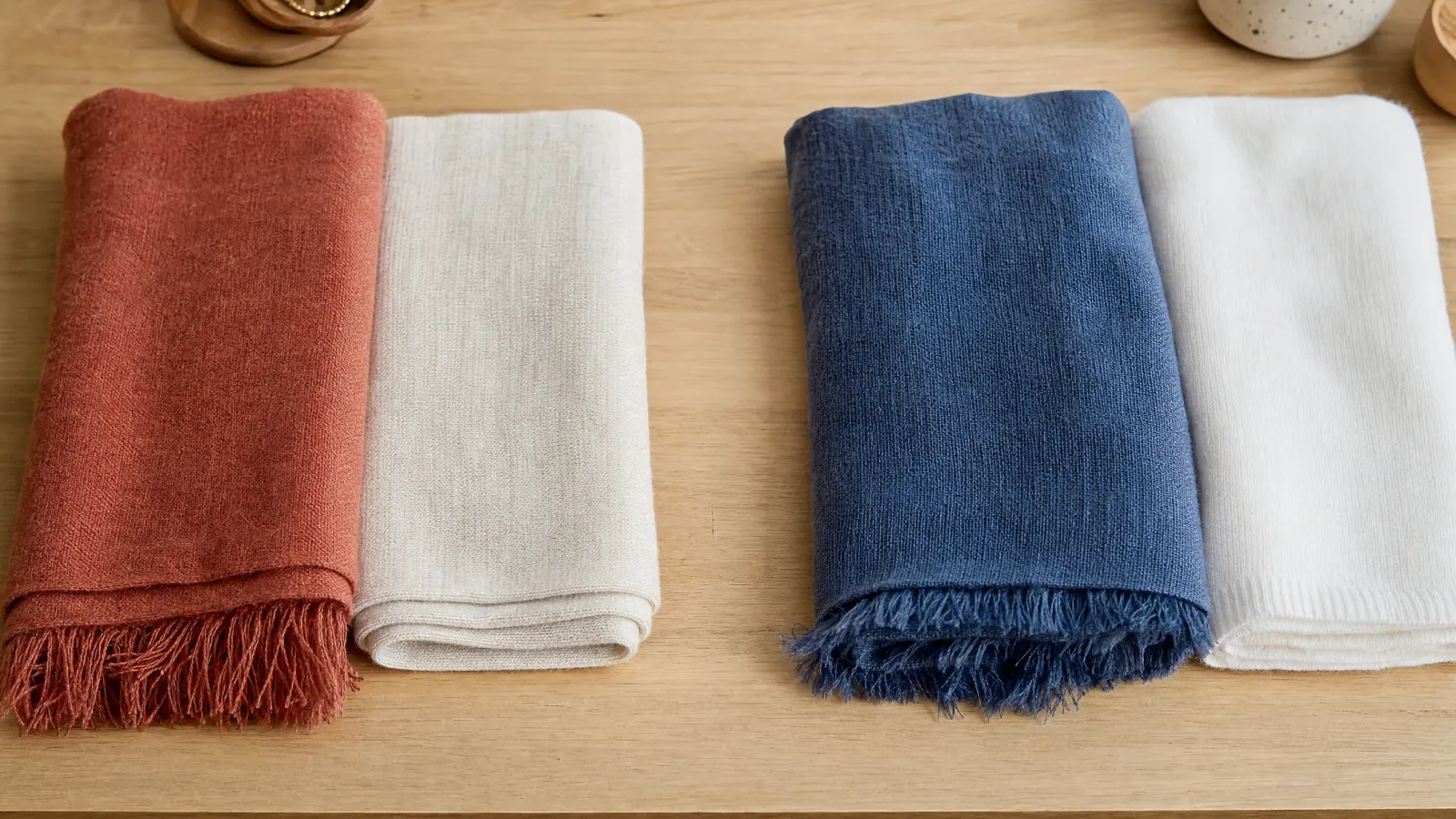
Take it again
What your answer means
Warm: start with cream, camel or terracotta. Explore warm undertones.
Cool: start with blue, rose or gray. Explore cool undertones.
Neutral: try both groups, then compare light and dark colors. Explore neutral undertones.
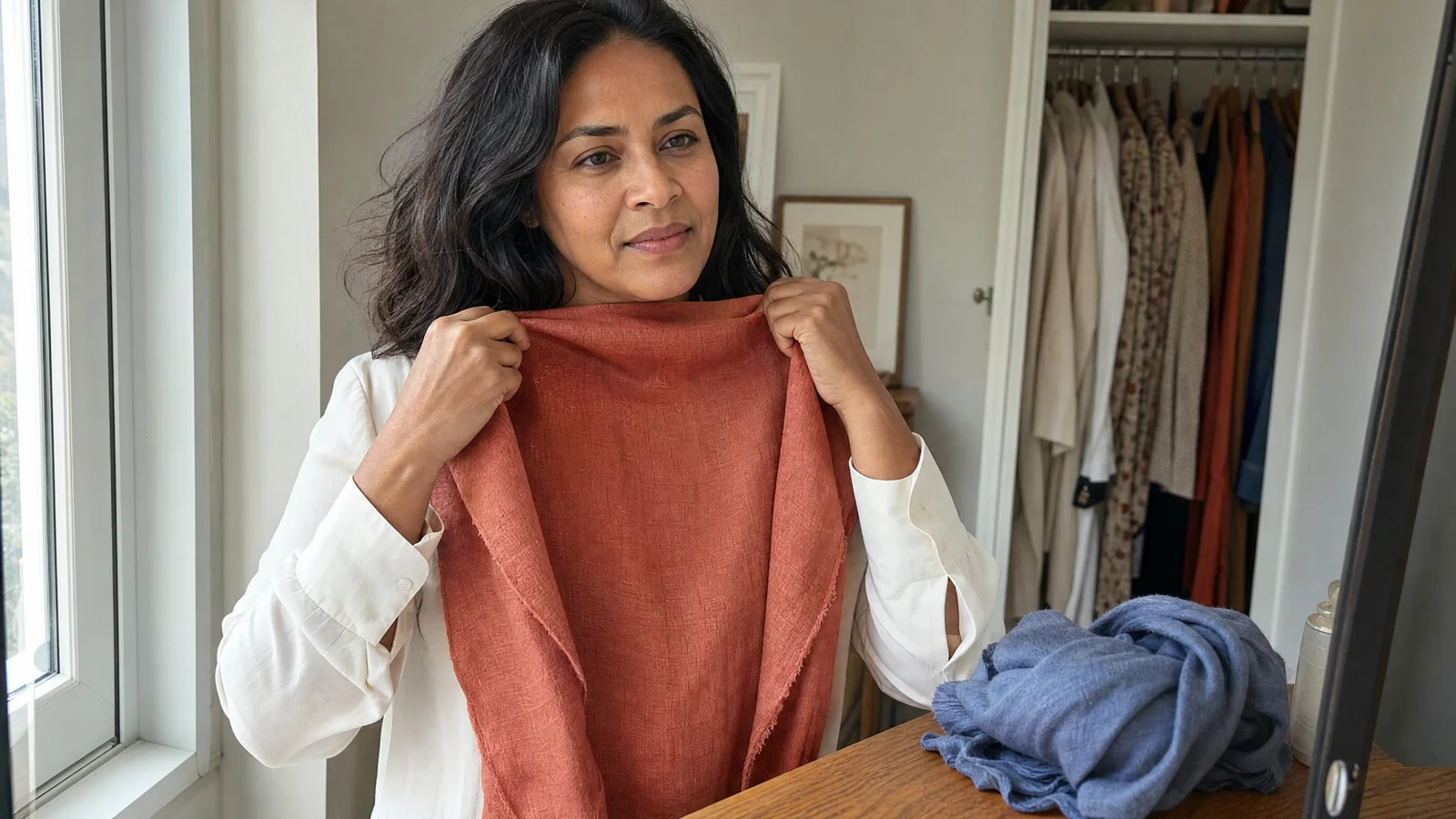
Look at colors beside your face.
A vein color or a single photo can be hard to judge. Start with a simple fabric comparison in soft daylight. Look at your face and the fabric together. Notice which balance you prefer.
This short quiz is a starting point. It cannot see your face or compare fabrics for you. Your hair color, the room's light and your own preferences can affect the answer.
Read the warm and cool color guide →
Questions people ask
- Can my undertone change?
- Undertone describes the warm or cool cast of your coloring. A tan, makeup or different light can change how your skin looks. Compare colors in the same soft daylight.
- Is undertone the same as skin tone?
- No. Skin tone describes how light or deep your skin is. Undertone describes its warm or cool cast. People with very different skin tones can share an undertone.
- What if I get neutral?
- Your answers do not strongly favor warm or cool. Try colors from both groups. How light, dark, bright or soft a color is may help you choose.