Start with color
What is color analysis?
A useful starting point for choosing clothes, understanding your palette, and trying colors you might have walked past.
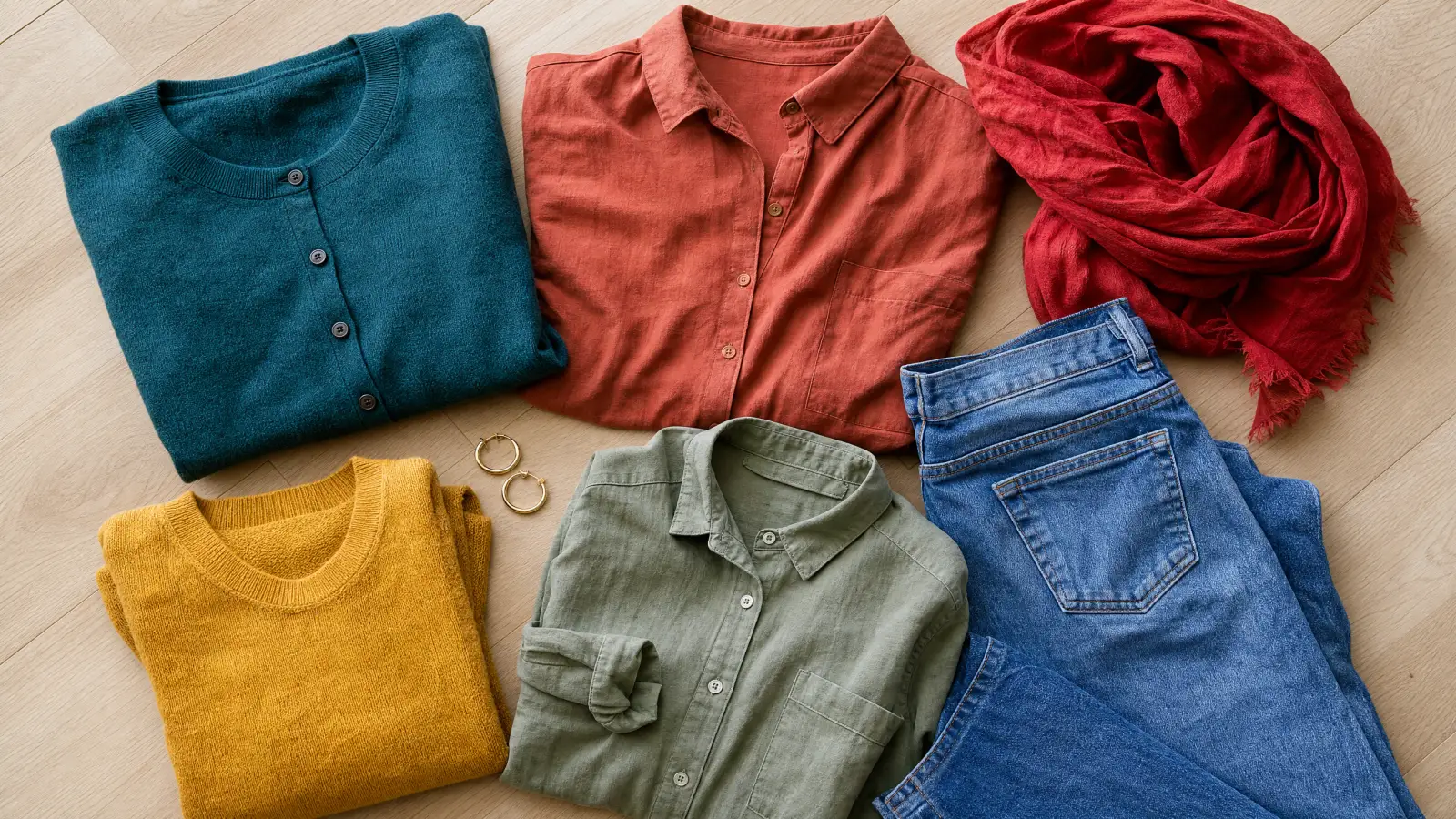
Color analysis helps you find clothing colors that look good near your face. The result is a group of colors for tops, dresses, scarves, glasses, and jewelry. You can use it when you shop or get dressed. You can still wear any color you love.
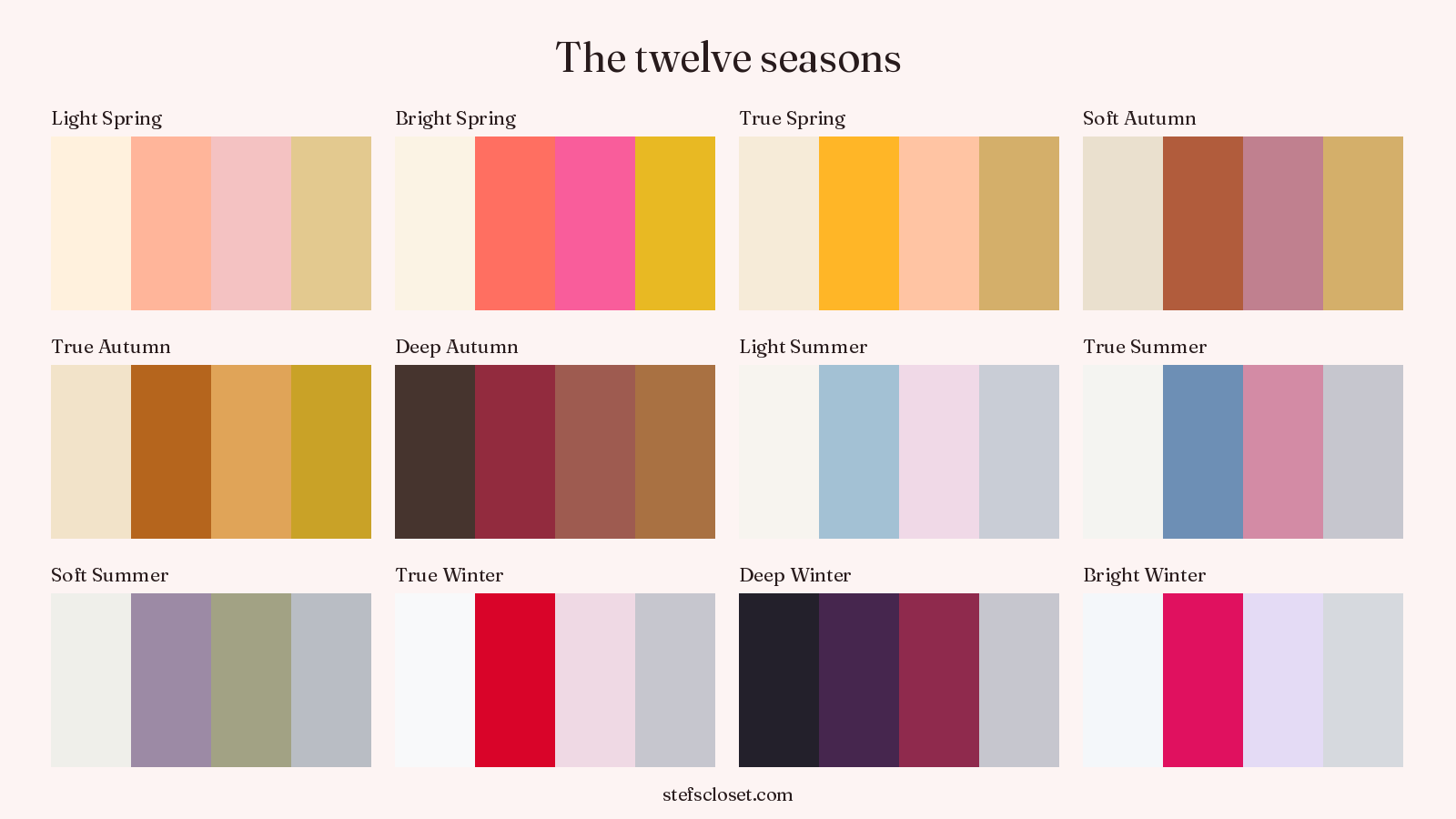
Most color analysis systems compare three things: warm or cool, light or dark, and bright or soft. These can lead to a season name such as Soft Autumn or Bright Winter. The name helps you find your palette, which is simply your group of suggested colors.
What makes two colors different?
Start with these simple comparisons. A color can be warm or cool, light or dark, and bright or soft.
Warm or cool
Terracotta has an orange feel. Steel Blue has a blue feel.
Light or dark
Icy Blue is much lighter than Indigo Night.
Bright or soft
Cobalt is a strong blue. Steel Blue looks more gray.
What does color analysis look at?
Warm colors have more yellow in them. Think of tomato red and golden brown. Cool colors have more blue in them, like berry red and blue-gray. Your best colors may lean warm, cool, or sit between the two.
Light or dark means how pale or deep a color is. Bright colors look clear and strong. Soft colors look gentler because they have more gray in them. Your hair, eyes, and skin can help show which kinds suit you.
A color analyst may place pieces of colored cloth around your face. These pieces are called drapes. Lindsey Myers of Created Colorful recommends looking at how skin reacts beside real colors in natural light. You can do a simple version with tops from your closet.
Why are the seasons called spring, summer, autumn, and winter?
Each name stands for a group of colors. Spring palettes are generally warm and clear. Summer palettes are generally cool and soft. Autumn palettes tend to be warm and soft, while Winter palettes tend to be cool and clear.
Some systems split each season into three smaller groups. That makes twelve seasons in all. It explains why two people who both suit warm colors may need different greens or reds.
See four color families.
These are four example palettes. Each season family has three versions, for a total of twelve.
True Spring
Soft Summer
Soft Autumn
True Winter
See how coloring changes the palette.
Compare a warm, softly blended example with a cool example that has a stronger light-and-dark difference.

Warm and softly blended.
- Warm brown hair and muted hazel eyes.
- The colors in her features blend gently.
That warm, soft mix is the idea behind Soft Autumn. Try Terracotta and Sage.

Cool color comes first.
- Dark, ash-toned hair and cool gray-blue eyes.
- Her hair is much darker than her skin.
True Winter puts coolness first. Try Sapphire and Icy Blue beside your face.
These are example color patterns. A season includes many skin tones and eye colors. You do not need to look like the example. Hair and eyes give clues; compare fabrics near your face before choosing a season.
What can your palette help you buy?
Start with clothes that sit near your face. Find one everyday color for tops, your best kind of white, and one stronger color you enjoy. Those three choices can make a big difference.
A palette can make online shopping easier too. You can spend less time looking at colors that rarely work for you. Screens do not always show color correctly, so check the item in daylight when it arrives.
Do you have to stop wearing colors outside your season?
No. Your palette is a buying guide, not a dress code. Keep any color you enjoy and pay more attention to placement when it seems harsh beside your face.
Trousers, skirts, bags, and shoes give you plenty of room to wear colors that are not in your palette. For a favorite off-palette top, try a jacket, scarf, or neckline in one of your better colors. You may find that changing the color nearest your face is enough.
Try color near your face first.
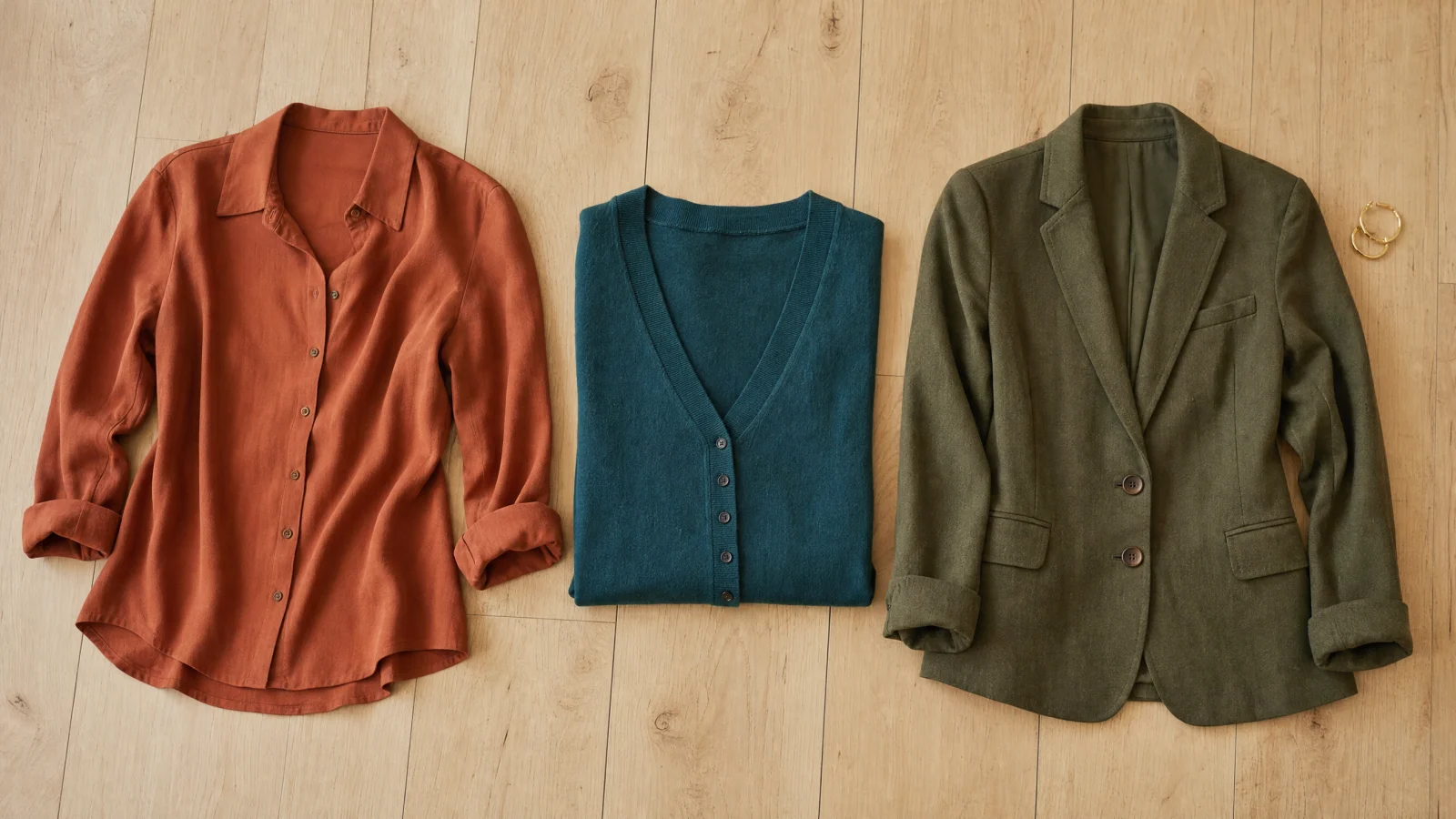
A top or scarf is an easy place to start. These examples come from the Soft Autumn palette.
Can you find your season at home?
You can get a useful starting point at home. Compare colors near a window, but stay out of direct sun. Keep standing in the same place. Switch between the colors twice and look for a change you can see both times.
Skip the vein test. Lindsey Myers explains why vein color is not a reliable guide. If you cannot tell whether your skin looks warm or cool, choose neutral while you try more clothing colors.
What happens in the free color analysis?
The free color analysis asks five questions. It asks about your skin, natural hair, and eyes. It also asks which metal looks better near your face and whether your coloring looks bright or soft. The same answers produce the same result. You do not need to upload a photograph or make an account to see your palette.
Use the result to choose a few colors to try. Pull three colors from your closet that are close to the palette and try them beside your face in daylight. That final check turns a season name into something you can trust when you shop.
See the pieces together.
Add your clothes to Stef's Closet, explore pairings, and save outfits you want to wear.

If you already know your season, open the Soft Autumn palette guide to see how a season becomes actual clothing colors.
Open the full palette reference