The wardrobe edit
Soft autumn capsule wardrobe: 12 pieces
A small set of clothes, a palette you love, and more combinations to try. Start with what is already in your closet.
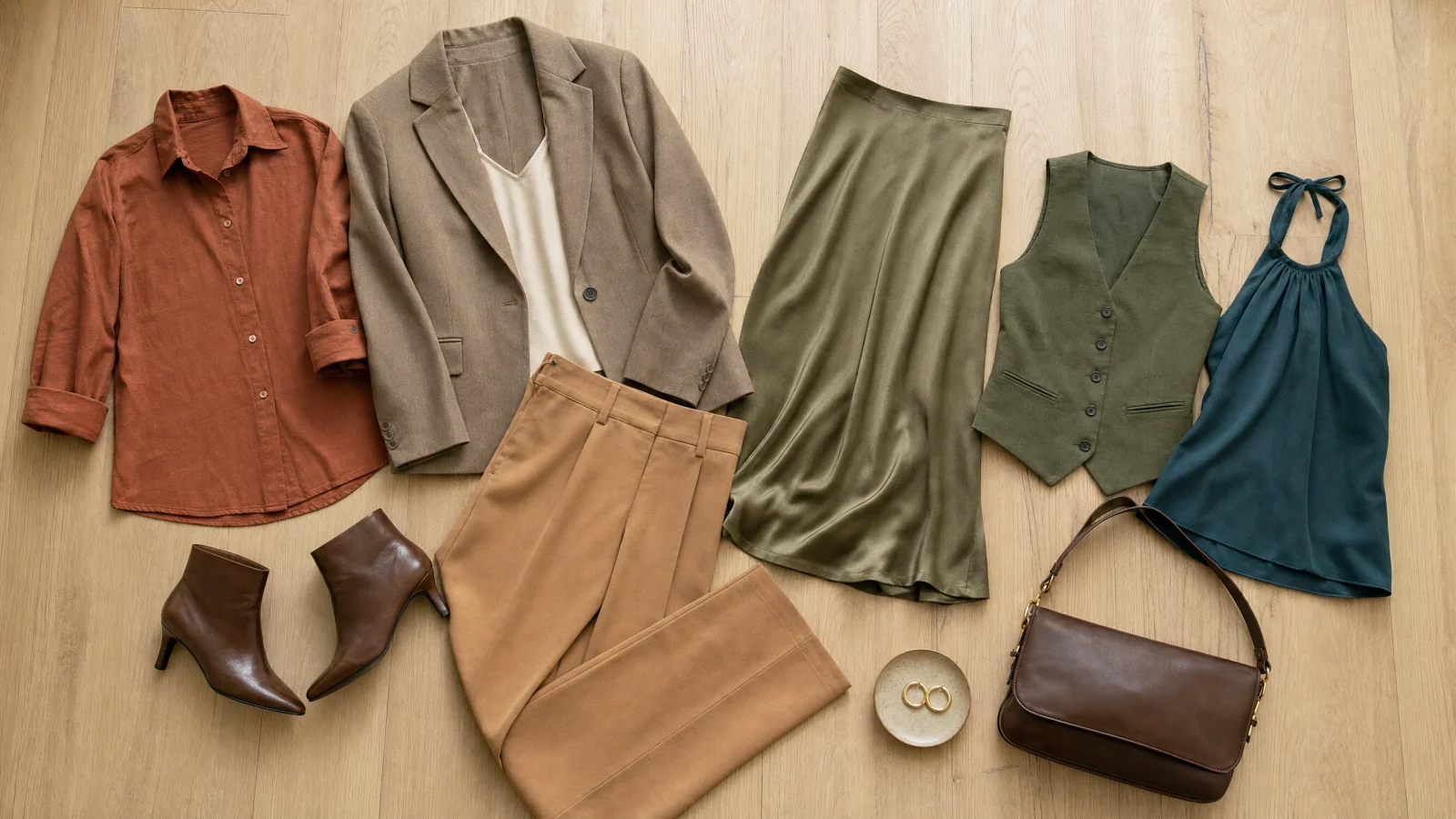
A capsule wardrobe is a small group of clothes you can mix and match. This Soft Autumn version uses warm, soft colors. Start with 12 pieces you already own: four tops, three bottoms, two layers, two pairs of shoes and one scarf. The four tops and three bottoms make 12 possible top-and-bottom pairs. Trying them on tells you which ones are real outfits for your life.
This is a small wardrobe test, not a rule for how much you should own. Keep the pieces that fit, work together and suit your week. Write down the one thing you keep wishing you had before you buy anything.
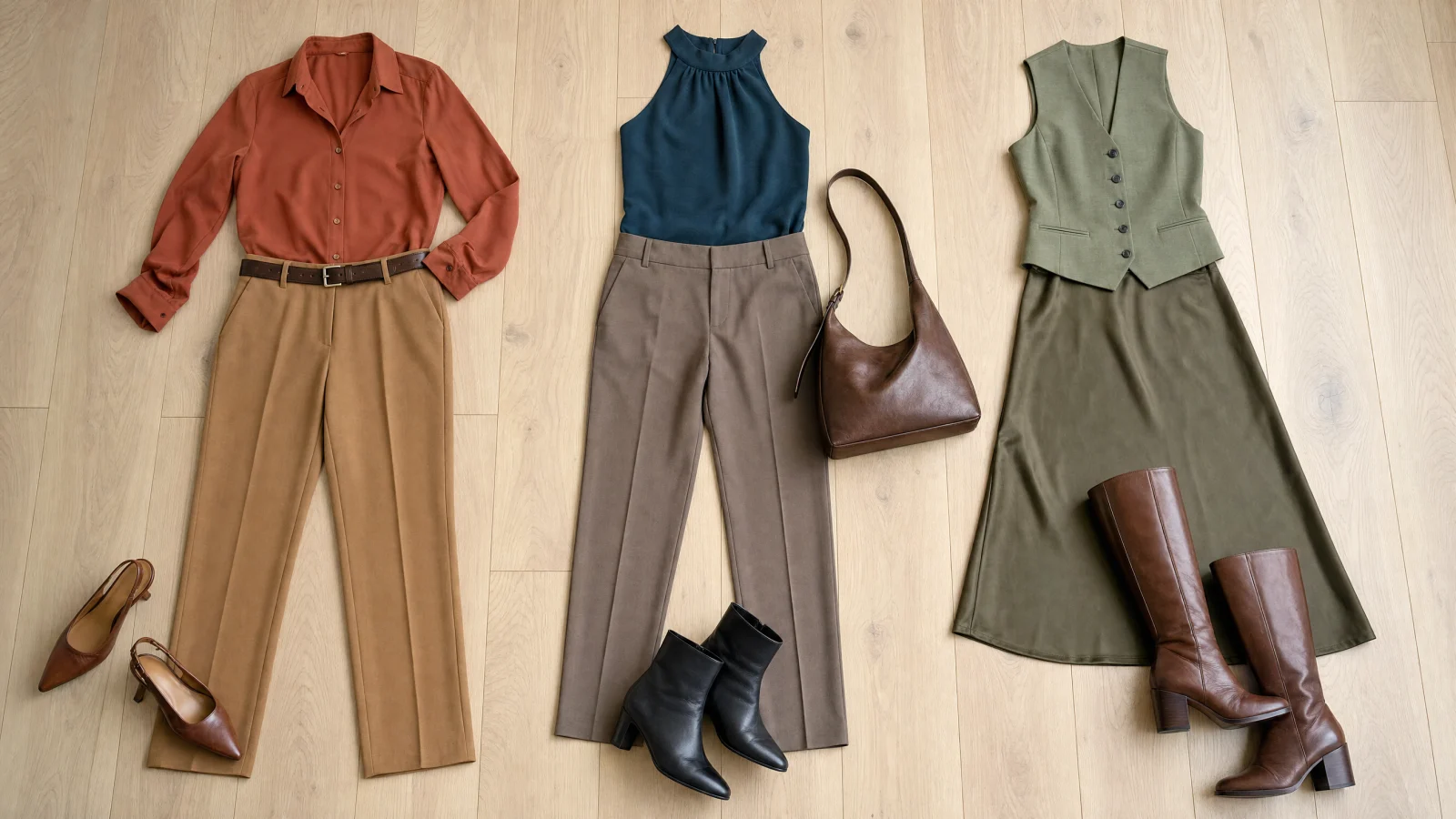
A few tops and bottoms can give you several looks to try. Use these pictures for ideas and choose shoes and bags you already own.
Which 12 pieces make a useful capsule?
Use this dressed-up plan as a starting point. A camisole is a top with thin straps. A waistcoat is a fitted sleeveless top with buttons. Change the pieces to match your life. Stacey Herndon, founder of Radiantly Dressed, recommends beginning with 10 to 12 pieces, a narrow color selection and clothes you really wear.
- Warm Ivory silk camisole
- Terracotta silk blouse
- Deep Teal draped halter top
- Sage fitted waistcoat
- Camel tailored trousers
- Warm Taupe slim trousers
- Olive satin midi skirt
- Camel fitted blazer
- Warm Taupe short tailored jacket
- Warm Taupe pointed heels
- Camel slim-heel ankle boots
- Dusty Rose silk scarf
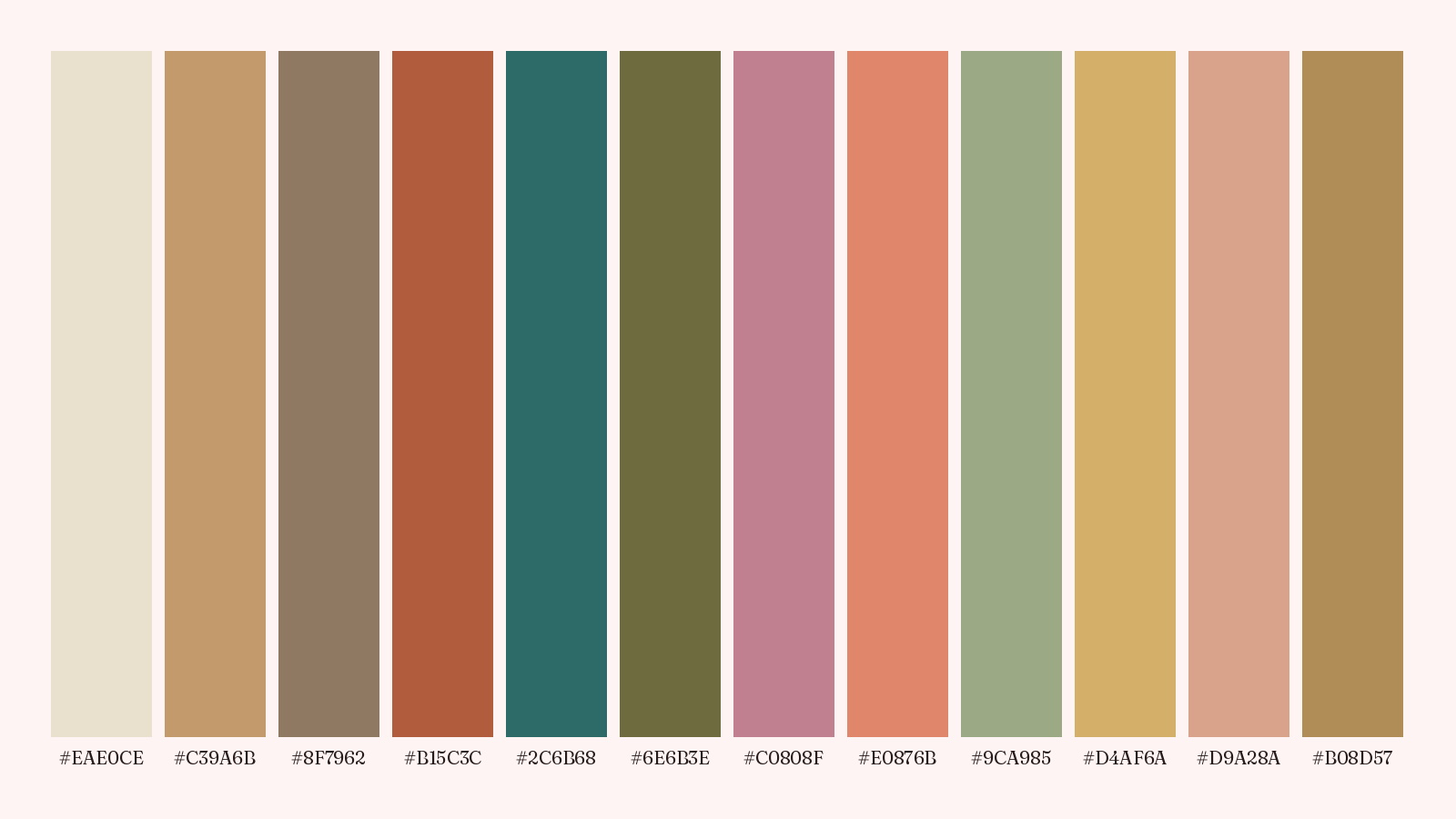
These are exact names from the site's Soft Autumn palette. A palette is a group of colors. Fabric and light change how colors look, so your clothes do not need to match the screen exactly.
Why these warm, soft colors?
This example connects the palette to the coloring it is designed around.

Warm and softly blended.
- Warm brown hair and muted hazel eyes.
- The colors in her features blend gently.
That warm, soft mix is the idea behind Soft Autumn. Try Terracotta and Sage.
These are example color patterns. A season includes many skin tones and eye colors. You do not need to look like the example. Hair and eyes give clues; compare fabrics near your face before choosing a season.
Why do four tops and three bottoms make 12 pairs?
Each of the four tops can pair with each of the three bottoms. That gives you 4 × 3 = 12 possible starting pairs. The layers, shoes and scarf help you dress those pairs up, warm them up or make them more relaxed. You may not like all 12.
Fit can rule out a pair. A long blouse may bunch over a skirt waistband. Another pair may be wrong for work, the weather or a day at home. Eight pairs you enjoy wearing are more useful than 12 that only work on paper.
Four tops × three bottoms.
Each pair shows a top color on the left and a bottom color on the right. Try these combinations with your own clothes.
12 possible pairs, before you check the fit. Keep the ones you enjoy wearing.
How do you test the capsule?
- Put the four tops and three bottoms together where you can reach them.
- Try every top with every bottom and take a quick mirror photo.
- Sit, walk and raise your arms so you catch fit problems.
- Mark each pair yes, maybe or no for your normal week.
- Add a layer and shoes only to the yes and maybe combinations.
Judge fit first. Then check the temperature and occasion. A pair can look good and still be too warm for your climate or too casual for the place you are going.
Add the clothes you own to Stef's Closet and see outfit ideas. You can narrow the list instead of keeping every pair in your head. Try on the suggestions before you save them as outfits.
See the pieces together.
Add your clothes to Stef's Closet, explore pairings, and save outfits you want to wear.

What should you swap for your own life?
Swap the Olive satin midi skirt for another pair of tailored trousers if you do not wear skirts. Replace the blouse with another washable top if that is what your week needs. A capsule becomes useful when every category reflects how you get dressed.
Dresses can stay outside the top-and-bottom calculation. Underwear, sleepwear and weather-specific coats are outside this exercise too. Keep the rest of your closet while you test this small group.
If you are unsure about the palette itself, compare Soft Autumn with Soft Summer before replacing an everyday brown or gray piece. The free color analysis can also give you a season and named colors to start from.
What should you buy first?
Buy only after the try-on shows the same gap more than once. If several tops lack a workable bottom, that bottom has a clear purpose. If good pairs need warmth, a layer that works across several of them may be the better buy.
A light top you will wear, a bottom that matches tops you own and one useful layer are good places to look. You may already own all three. The right color cannot fix a piece that fits badly or does not suit your week.
Keep your colors easy to mix.
Start with a few of these colors. You do not need to buy something in every shade.
How do you grow the capsule?
Add one piece at a time and try it with the working set. A new top is more useful when it works with two or three bottoms. A new layer should fit over the tops you wear most. Check that the sleeves and hem sit well.
The wardrobe guide can help you build beyond this first group. For tomorrow, pick 12 pieces from your closet and try the 12 pairs. Keep the ones you would actually wear and write down one gap, if there is one.
Open the full palette reference